
If you adopted a mixed-breed dog, you have probably wondered what breeds are actually in there, and whether any of them carry health risks you should know about. Dog DNA test kits answer both questions from a simple cheek swab you can do at home in under a minute. The laboratory reads your dog’s genetic markers, compares them with a database of recognised breeds, and screens for inherited conditions that could affect your dog later in life. This guide explains how dog DNA test kits work, what their results can and cannot tell you, how to choose a reliable kit, and how to use the results to give your dog better care.
How Dog DNA Test Kits Work
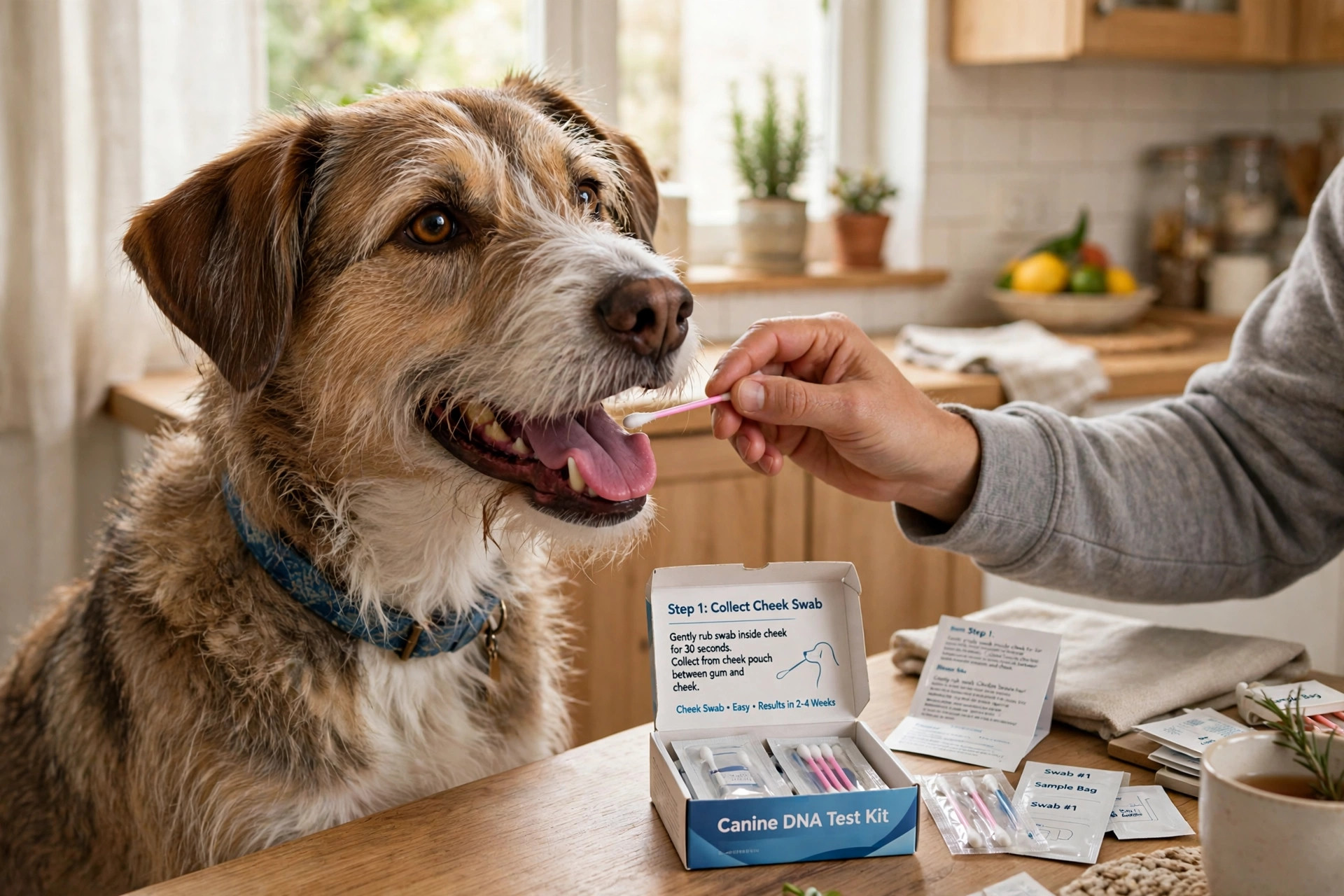
Every kit follows the same basic process. You order the kit, register it online, and swab the inside of your dog’s cheek with the stick provided, usually for about thirty seconds on each side. You post the swab back in the prepaid envelope, and the laboratory extracts DNA from the cells and analyses thousands of genetic markers. Within two to six weeks, your results appear in an app or on a website, showing a breed breakdown, sometimes down to a few percent, plus any health markers the test screens for.
The accuracy of the breed result depends heavily on the size and quality of the company’s breed database. Companies with larger databases, built from many thousands of verified purebred dogs, can identify mixed ancestry more precisely, especially for less common breeds. Results for dogs with many breeds in their background are estimates, not certainties, and two different companies can give slightly different percentages for the same dog. Treat the breed mix as a well-informed picture, not a legal pedigree document.
What the Health Screening Actually Covers
The health part of dog DNA test kits is where the real value often lies. Depending on the kit, the laboratory screens for well over a hundred inherited conditions, from eye disorders and heart conditions to drug sensitivities that change which medicines your dog can safely take. One famous example is the MDR1 gene variant, common in herding breeds, which makes dogs dangerously sensitive to certain common drugs. Knowing about it before your vet prescribes medication can genuinely prevent a crisis.
It is important to understand the limits, though. A genetic risk is not a diagnosis. Many conditions need more than one gene, or need environmental triggers, before they appear, and a dog can carry a marker its whole life and never become ill. Equally, a clear result does not mean your dog is guaranteed healthy. The right way to use dog DNA test kits is as an early-warning system: share the full report with your vet, who can decide which findings deserve monitoring, extra checks, or changes to diet and exercise. Used that way, the results slot neatly alongside other health tools, and our guide to smart dog health monitoring shows how ongoing tracking complements a one-time genetic snapshot.
Breed Results: Fun, but Also Practical
Most owners buy a kit out of curiosity, and the breed reveal is genuinely enjoyable. But breed information has practical uses too. Different breeds have different exercise needs, grooming demands, and temperaments, and knowing the mix helps you understand behaviours that otherwise look random. A dog that herds children around the garden, digs relentlessly, or needs far more running than its size suggests may simply be expressing a strong breed instinct, and training works better when it works with that instinct rather than against it.
Breed results also help with weight and feeding. A dog that looks overweight for one breed may be perfectly healthy for another, and expected adult size varies hugely between breeds. If you adopted a puppy of unknown background, the breed mix gives you a much better idea of how big it will grow, which matters for choosing food portions, crate sizes and even the right best smart dog toys for its energy level. Knowledge of breed traits turns guesswork into a plan.
Choosing a Reliable Kit
When comparing dog DNA test kits, look at four things. First, the number of breeds in the database and whether the company explains how it validates them. Second, the number of health conditions screened, and whether results include clear explanations or just a list of codes. Third, whether a vet or genetic counsellor can help interpret worrying results, since a raw list of risk markers can be frightening without context. Fourth, the company’s data policy: check what happens to your dog’s genetic data, whether it is shared or sold, and whether you can delete it. A reputable company states this plainly.
Price is a reasonable guide but not a perfect one. Basic breed-only kits cost less, while breed plus health kits cost more and usually deliver more lasting value, because health information stays relevant for your dog’s whole life. Avoid kits that promise to predict your dog’s exact behaviour or lifespan; genetics influences both, but neither can be read off a swab with certainty. If a claim sounds too precise, it probably is.
Getting a Good Swab
Most failed or inconclusive results come from a poor swab, not a bad laboratory. Do not feed your dog for at least half an hour before swabbing, and keep other dogs away while you do it, because their DNA on the swab confuses the result. Rub firmly but gently inside the cheek and under the lip for the full time the instructions ask, then let the swab dry briefly before sealing it. If the company reports that the sample failed, it will usually send a replacement kit free of charge, so a failed first attempt is an inconvenience, not a lost purchase.
What to Do With the Results
When the results arrive, read them calmly and in full before worrying about any single line. Start with the breed breakdown and the traits section, then move to health findings, and note anything marked as high relevance. Book a routine vet visit to go through the health section together, and ask specifically about screening, diet, exercise limits, and medicines to avoid. Update your records so any future vet or emergency clinic can see the findings quickly.
Then use the knowledge day to day. If the results suggest joint risks, keep your dog lean and avoid repetitive jumping while it is young. If they show a sensitive stomach breed background, choose food accordingly and change diets gradually. If a drug sensitivity appears, tell every vet, groomer and boarding kennel that handles your dog. Dog DNA test kits do not change who your dog is, but they change how well you can look after it, and that is exactly what good pet technology should do. For owners who love understanding their dog better, a DNA kit is one of the simplest and most rewarding pieces of pet tech you can buy.