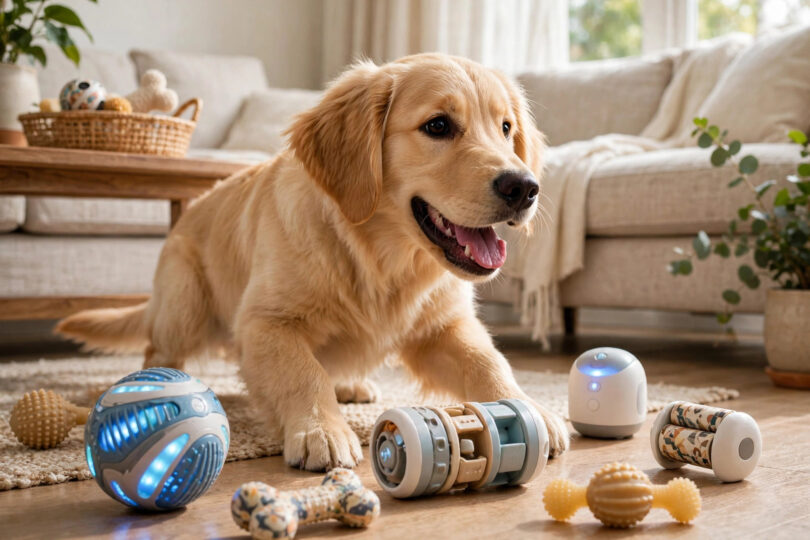

A bored dog is rarely a well-behaved dog. When dogs do not get enough mental and physical stimulation, they invent their own entertainment: chewing furniture, barking at windows, digging at carpets, and emptying bins. The best smart dog toys are designed to prevent exactly that. They move, react, dispense treats, and adapt to your dog in ways a plain rubber ball never could, keeping minds busy and bodies active even when your own schedule is packed. This guide explains the main types of smart toys, how to choose the best smart dog toys for your dog’s play style, and how to use them safely.
What Makes a Dog Toy “Smart”?
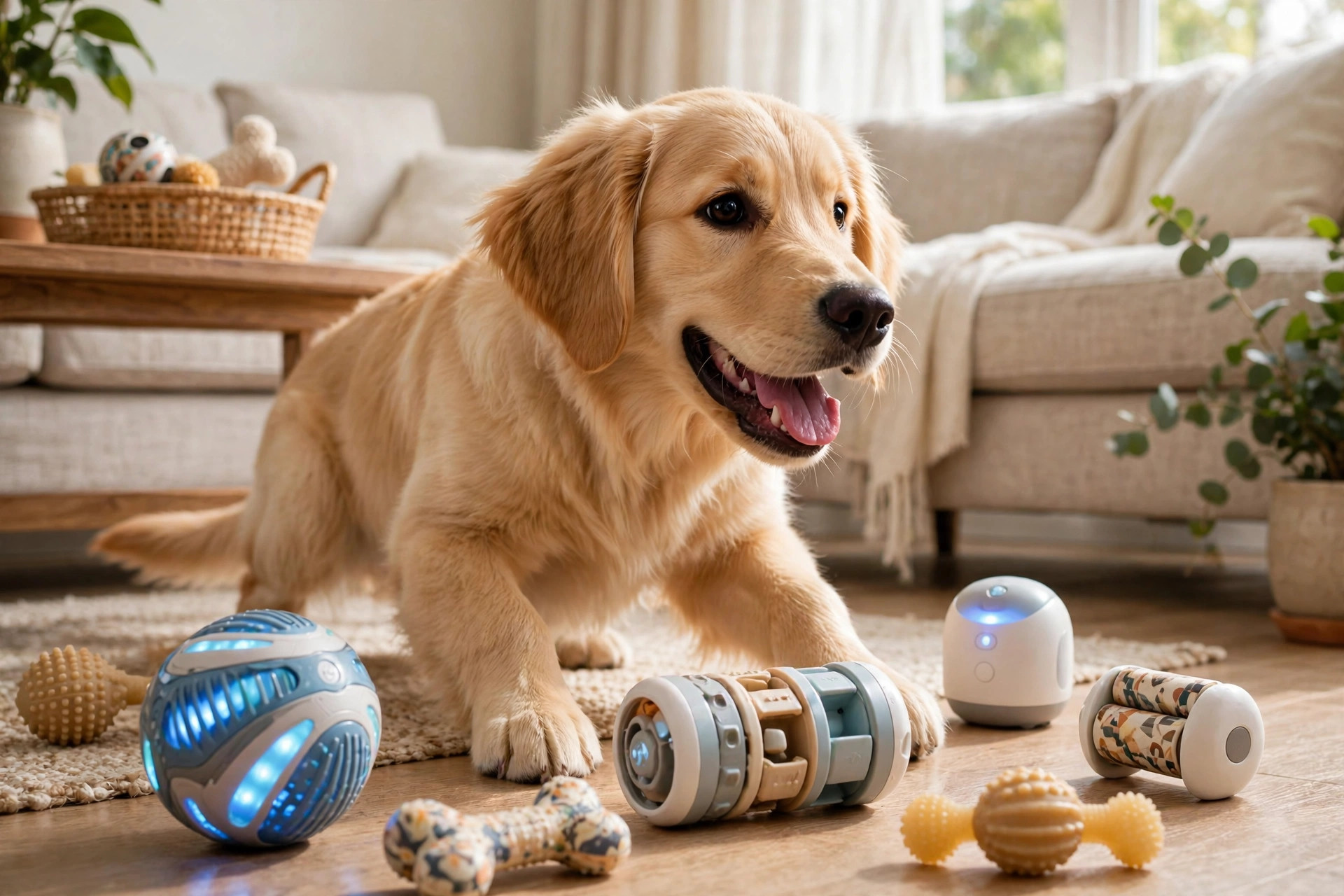
A smart toy contains electronics: sensors, motors, speakers, or an app connection. Instead of sitting still until your dog loses interest, it responds. It might roll away when pawed, wobble unpredictably, make sounds, light up, or release a treat when your dog solves a puzzle. That unpredictability is the point, because it taps into your dog’s natural instincts to chase, hunt, and work for food.
The Main Types of Smart Dog Toys
Automatic Ball Launchers
For fetch-obsessed dogs, nothing beats a launcher that throws again and again. The models we reviewed in our guide to automatic ball launchers for smart exercise let high-energy dogs run themselves happily tired in the garden, and many dogs learn to drop the ball back in themselves, creating a self-running game.
Interactive Rolling and Chasing Toys
Self-rolling balls and moving toys trigger the chase instinct. Good ones change direction when they bump into furniture, speed up when your dog catches them, and go to sleep after a set time so your dog rests too. They are ideal for indoor play in flats and on rainy days.
Puzzle Feeders and Treat-Dispensing Toys
These toys make your dog think for their food. Rolling dispensers, sliding puzzles, and app-controlled treat toys stretch a meal from thirty seconds to twenty minutes of focused problem solving. Slow feeding is also healthier: it reduces gulping, aids digestion, and helps with weight control.
App-Connected and Camera Toys
The most advanced smart dog toys connect to your phone. Some let you drive the toy remotely, others are built into pet cameras so you can play, talk, and toss treats from work. Used in short sessions, they are a lovely way to break up a long day alone for your dog.
How to Choose the Best Smart Dog Toys for Your Dog
- Play style: Chasers need moving toys, thinkers need puzzles, and powerful chewers need toys built for jaws, not novelty.
- Size and durability: Match the toy to your dog’s size and check what the toy is made from. If your dog destroys toys, avoid anything with small parts or thin shells.
- Battery life and charging: Toys that recharge by USB are cheaper to run than battery eaters, and longer play time per charge means the toy is ready when your dog is.
- Noise level: A toy that beeps and whirs at 6 a.m. will not stay popular with the humans in the house. Look for volume controls or quiet modes.
- Washability: Toys that touch treats and floors get grubby fast; removable, washable covers are a real plus.
Smart Toys and Training Go Together
Play is also learning. Short toy sessions can reward calm behaviour, practise drop and leave it, and build focus around distractions. Owners who already use structured training will find toys slot in naturally, especially alongside the methods in our guide to AI dog training apps that teach better behaviour. A dog that has worked for a puzzle treat is a dog that settles more quickly afterwards.
Safety Rules for Smart Toys
Supervise First Sessions
Always watch the first few sessions with any new toy. Learn how your dog attacks it, whether they try to chew the casing, and whether any part could break off. Only leave a toy unsupervised once you are confident it is safe for your dog.
Rotate, Do Not Accumulate
Keep two or three smart toys in rotation and put the rest away. A toy that disappears for a week comes back exciting, which stretches your budget and keeps play fresh without buying more.
Signs Your Dog Needs More Stimulation
Before you shop, it helps to recognise what under-stimulation looks like. Common signs include restlessness in the evening, attention-seeking barking, following you from room to room, destructive chewing aimed at your belongings rather than their own toys, and over-excitement when anything finally does happen. Working breeds and young dogs show these signs fastest, but any dog can become frustrated when days are empty. Smart toys are not a substitute for walks and company, yet they fill the gaps in a way that genuinely tires the brain, and a mentally tired dog displays fewer of these behaviours within days.
Smart Toys for Different Life Stages
Puppies
Choose soft, gentle puzzles and slow feeders that build confidence without frustration. Keep sessions very short, and always swap the toy for a treat at the end so your puppy learns that giving things up is rewarding.
Adult Dogs
Adults can handle the full range: launchers for athletes, complex puzzles for thinkers, and app-controlled toys for dogs home alone during the working day. Match difficulty to ability; a puzzle your dog solves in ten seconds is a snack bowl, not a toy.
Senior Dogs
Older dogs still need stimulation, but gentler forms. Lick mats, easy treat dispensers, and soft interactive toys keep ageing minds active without stressing joints, and the routine of a daily puzzle is something many senior dogs visibly look forward to.
Conclusion
The best smart dog toys match your dog’s instincts, size, and energy, and they earn their place by keeping your dog happily occupied day after day. Start with one toy that fits your dog’s favourite way to play, supervise the early sessions, and rotate toys to keep them exciting. A stimulated dog is a calmer, healthier, and much better-behaved companion, and that makes smart toys one of the smartest buys in pet tech.