
Dogs sleep for twelve to fourteen hours a day, and older or larger dogs often sleep even longer, yet most owners spend far more time choosing a collar or a toy than choosing the bed their dog spends half its life on. That is starting to change, because smart dog beds combine orthopedic support with built-in sensors that track how your dog sleeps, and the data they collect can reveal health problems weeks before you would notice them yourself. This guide explains how smart dog beds work, what the sleep data actually means, which features are worth paying for, and how to choose the right bed for your dog’s size, age and health.
What Makes a Bed “Smart”?
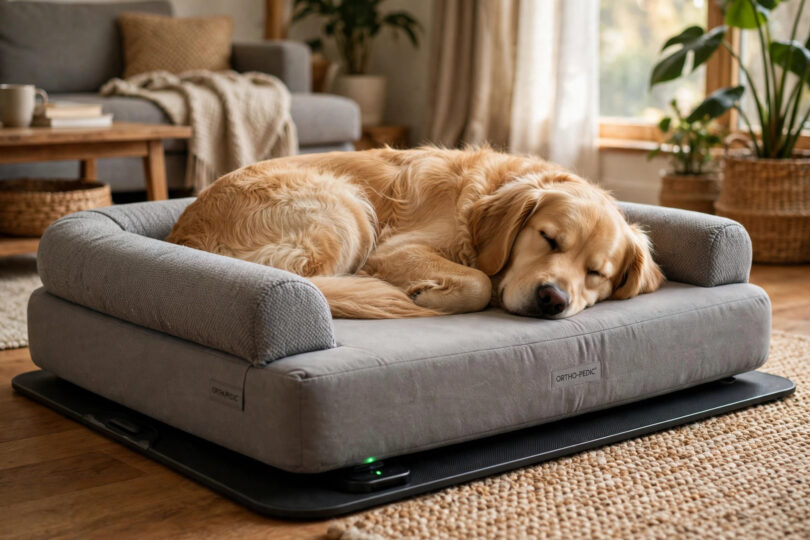
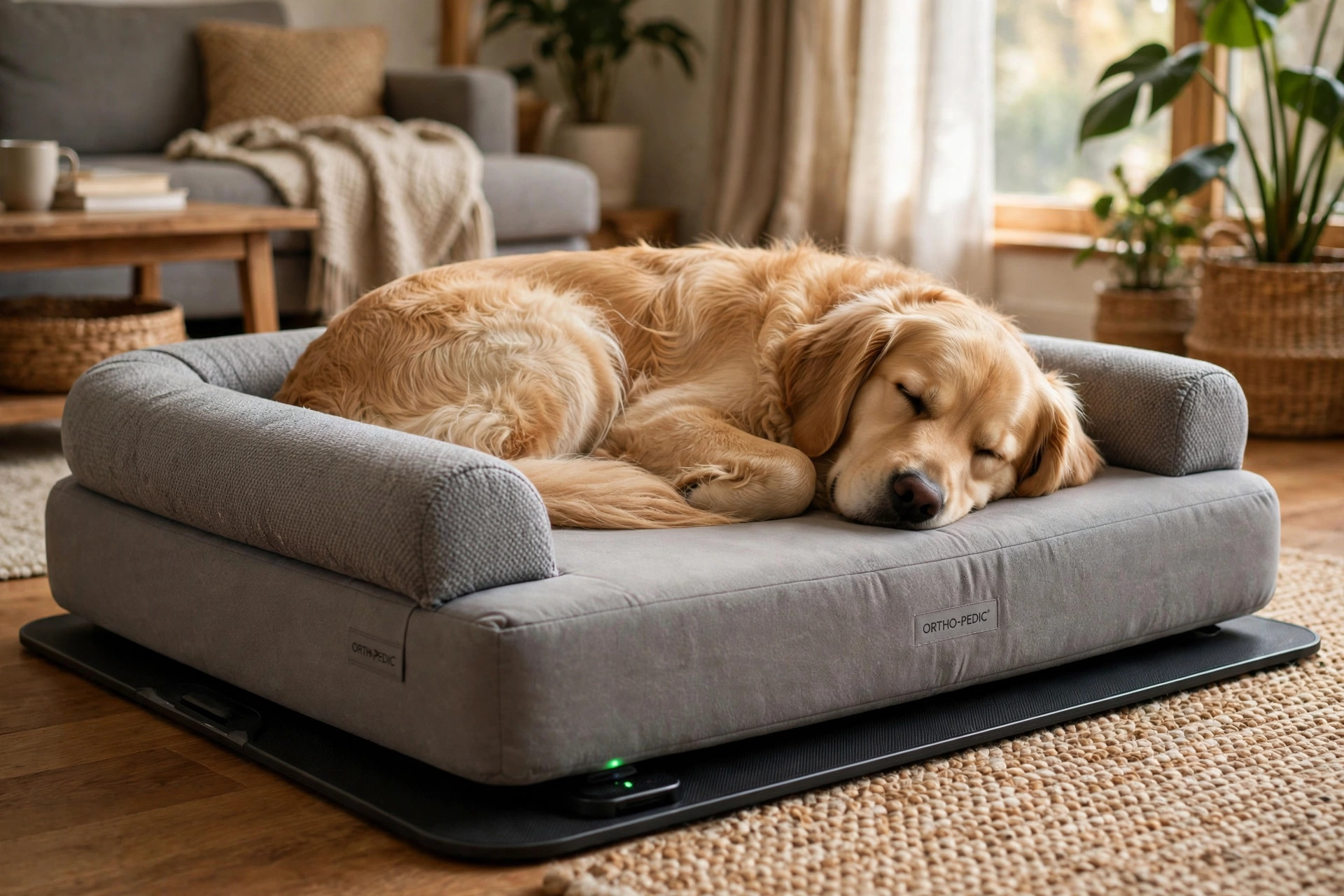
A traditional dog bed is just padding in a cover. Smart dog beds add a thin layer of technology, usually a sensor mat hidden under the sleeping surface, that quietly records movement through the night. The mat detects when your dog lies down, how long it stays settled, how often it shifts position, and how restless it is during the night. That information is sent to an app on your phone, where it appears as a simple sleep score and a nightly chart. Nothing about the bed looks or feels high-tech to your dog, which is exactly the point: the technology works in the background while your dog simply sleeps.
Most smart dog beds also keep the orthopedic basics right. The best models use thick memory foam that spreads your dog’s weight evenly and takes pressure off hips, elbows and shoulders. This matters most for older dogs and large breeds, whose joints suffer most from thin, flat beds. A bed that only tracks sleep but offers poor support is a gadget, not a health tool. The best smart dog beds do both jobs at once: they cushion your dog properly and they watch over its rest.
What Sleep Tracking Can Tell You
Night after night, your dog’s sleep pattern becomes a baseline. When something changes, the app shows it clearly. A dog that suddenly sleeps much more than usual, wakes repeatedly, or struggles to settle may be in pain, developing arthritis, or fighting an early illness. Dogs are famously good at hiding discomfort, and many owners only realise something is wrong when a problem is already advanced. Sleep data gives you an early warning that is easy to miss with the naked eye, especially if your dog sleeps in another room.
The data is also genuinely useful at the vet. Instead of guessing how your dog has been sleeping, you can show your vet weeks of charts. That kind of record helps a vet judge whether a treatment is working or whether a new symptom is really new. For dogs already being treated for joint problems or anxiety, smart dog beds turn vague impressions like “she seems restless lately” into concrete evidence. If your dog already wears a health tracker, the bed’s data complements it well, and our guide to smart dog health monitoring explains how activity and sleep data fit together.
Features Worth Paying For
Not every feature on the box is worth the money. Start with the foam: look for at least four inches of dense memory foam for medium and large dogs, and a waterproof liner underneath the cover, because accidents and muddy paws happen. A removable, machine-washable cover is not optional in a real home; if you cannot wash it easily, the bed will smell within a month no matter how clever the sensors are.
On the technology side, the features that matter are automatic sleep detection, a clear nightly summary, and long-term trend charts rather than a single night’s score. Temperature regulation is a genuine bonus: some smart dog beds include a cooling layer or a gentle heating element, which helps dogs that overheat in summer or stiffen up in winter. Chew-resistant materials are worth considering for puppies and strong chewers, since a sensor mat is no use if your dog eats it in week one. Finally, check the app before you buy. If the app needs a paid subscription just to show your own dog’s history, factor that cost into the price honestly.
Choosing the Right Size
Measure your dog lying stretched out on its side, nose to tail, and add a few inches on each side. Dogs curl up when they sleep, but they also sprawl when they are deeply relaxed, and a bed that is too small forces them onto the floor or onto your sofa. For growing puppies, buy for the adult size you expect rather than the puppy in front of you. Most smart dog beds come in four or five sizes, and the sensor mat is sized to match, so buying the right size also means the tracking stays accurate.
Smart Dog Beds and Older Dogs
Senior dogs gain the most from smart dog beds. Arthritis, joint stiffness and cognitive changes all show up in sleep first: more position changes, shorter deep-sleep stretches, and difficulty getting comfortable. A supportive foam base eases sore joints, while the tracking alerts you to changes that are worth mentioning at the next vet visit. Some owners also pair a smart bed with a gentle ramp or steps beside it, so an older dog can climb in without jumping. Small comforts like these add up to a noticeably better quality of life for a dog that sleeps most of the day anyway.
For puppies and young dogs, the value is different but still real. A smart bed helps you learn your puppy’s normal sleep pattern while it is healthy, which makes any later change easier to spot. It also helps with house training, because a puppy that sleeps soundly through the night is usually a puppy whose daytime routine, feeding and exercise are in good balance. If restless nights continue, the data gives you something concrete to discuss with your vet or trainer instead of guesswork.
Do You Really Need One?
Honest answer: not every dog needs a smart bed. A healthy young dog on a good orthopedic bed may gain little from sleep tracking, and the money might be better spent on a GPS dog tracker for outdoor safety or on better food. But if your dog is older, recovering from surgery, prone to joint problems, or you simply want early warnings about its health, smart dog beds offer something no ordinary bed can. They turn the hours your dog already spends asleep into useful health information, without asking anything extra of you or your dog.
When you are ready to buy, start with support first and technology second. Choose the right size, check the foam quality and the washable cover, and only then compare apps and sensors. Read recent owner reviews for the exact model, because sensor accuracy and app reliability vary more than the marketing suggests. And remember that a smart bed supports your care, it never replaces it: if the data shows a worrying change, the next step is always a vet visit, not another night of watching the charts. Done right, smart dog beds are one of the quietest and most useful upgrades you can make to your dog’s daily life, and to your own peace of mind.