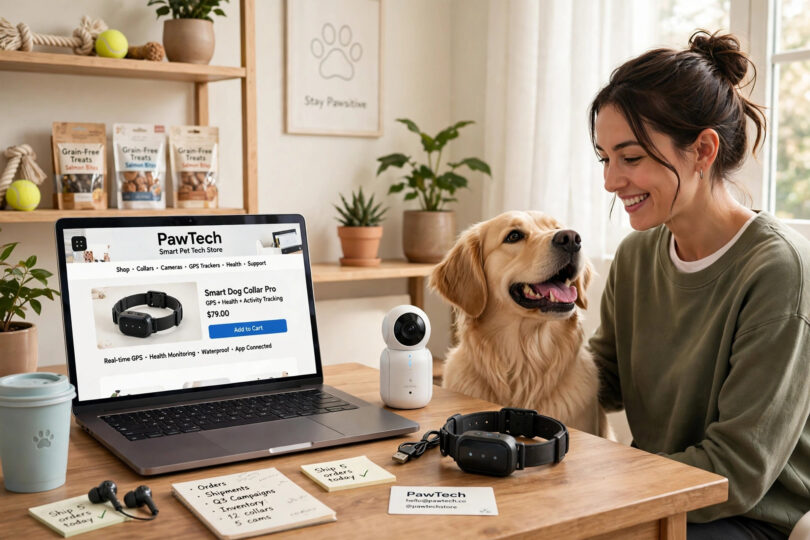

The pet industry is worth billions, and pet technology is its fastest-growing corner, because owners happily spend on gadgets that keep their dogs healthy, safe and entertained. That creates a genuine opportunity for anyone who loves dogs and understands technology, and pet tech business ideas range from a small online shop to a full product brand. The trick is to start with a real problem dog owners already complain about, rather than inventing a gadget nobody asked for. This guide covers the most promising pet tech business ideas, how to test them cheaply, and the practical steps that turn a good idea into a business that actually sells.
Why Pet Tech Is a Good Business Right Now
Three trends make pet tech business ideas attractive today. First, owners increasingly treat dogs as family members, and spending on their comfort and health keeps rising even when other spending falls. Second, the components behind pet tech, sensors, GPS chips, cameras and batteries, have become cheap and reliable, so a small team can build a credible product without a factory. Third, selling online removes the need for a shop, and marketplaces, social media and content let a tiny brand reach dog owners all over the world from day one.
That does not mean every idea works. Pet tech is competitive, and big brands already dominate trackers, cameras and feeders. The opportunity for a newcomer is usually in a niche the big brands ignore: a specific breed’s needs, a local market, a service wrapped around a product, or a design that solves one problem brilliantly. A small business that serves one group of dog owners extremely well will usually beat a generic gadget trying to serve everyone.
Business Idea 1: A Niche Online Pet Tech Store
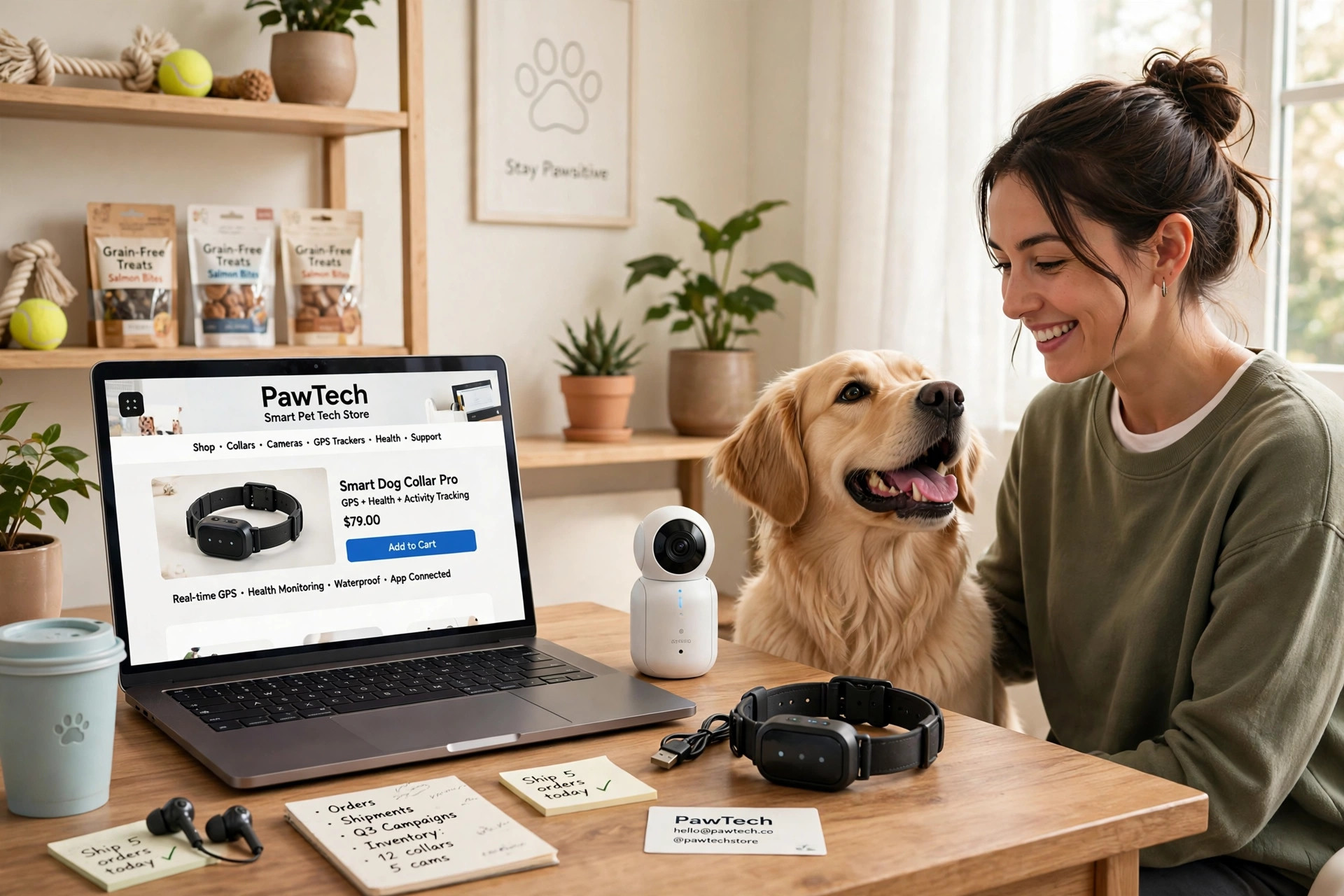
The simplest of all pet tech business ideas is a curated online store. Instead of stocking everything, you pick a niche, for example tech for senior dogs, apartment dogs, or active outdoor dogs, and stock only products that genuinely serve it, with honest reviews and advice. Owners trust a specialist shop more than a giant marketplace, and they return when they need the next product. You can start without holding stock by using dropshipping or affiliate sales, then move to your own stock once you know which products sell.
Content is your competitive advantage here. A store that publishes genuinely helpful guides, like our own coverage of the best smart dog toys, earns search traffic and trust that advertising alone cannot buy. Write about the products you sell, answer the questions owners actually ask, and let the content do the selling. Many successful pet tech stores began as blogs that only added a shop once readers started asking where to buy.
Business Idea 2: Pet Tech Installation and Support Services
Many dog owners want smart products but struggle to set them up, and that gap is a business in itself. A local service that installs pet doors, fits cameras, sets up feeders and teaches owners to use the apps can charge per visit and build repeat customers. This model needs little capital, no stock, and no product development, and it works especially well in affluent areas with many dog owners. You can add a subscription for ongoing support, seasonal check-ups and help when devices fail.
The same idea works online as a consultancy: remote setup sessions over video call, personalised product recommendations, and troubleshooting for owners who bought gadgets they cannot configure. If you already understand the products well, your knowledge is the product, and it scales through guides, videos and one-to-one sessions without any manufacturing risk.
Business Idea 3: Your Own Pet Tech Product
Building your own product is the highest-risk and highest-reward of the pet tech business ideas. Start by finding a problem you have experienced yourself, because your own frustration is the best market research. Talk to at least twenty dog owners before building anything, and ask what they already pay to solve the problem, because a problem nobody pays to solve is a hobby, not a business. Then build the smallest possible version: a prototype made from off-the-shelf parts, a simple app, or even a service that mimics the product by hand.
Test that prototype with real owners and watch how they actually use it, not how they say they will use it. Dogs chew, drool, roll in mud and ignore instructions, so durability testing with real animals is essential, and safety testing is non-negotiable for anything a dog wears, eats from or sleeps on. If the prototype survives real dogs and real owners, you have something worth manufacturing. Crowdfunding can fund the first production run, but only after the product is proven, because backers forgive delays far less readily than friends do.
Other Ideas Worth Considering
- A subscription box pairing treats with a rotating tech accessory or health check
- A pet tech rental service for expensive items like cameras and trackers
- Data services for vets and insurers built on activity and health tracking
- Training courses that teach owners to get the most from the tech they own
Each of these can start small and grow with demand, and each avoids head-on competition with the biggest brands by selling expertise, convenience or a service rather than another gadget.
Testing Your Idea Before You Spend Big
Before spending serious money, run a cheap test. Build a simple landing page describing the product or service, drive a small amount of traffic from social media or search, and measure how many visitors sign up or enquire. If nobody signs up, the idea needs rethinking before you invest further. If people sign up, contact them personally and ask what convinced them and what would stop them buying, because those answers shape your pricing and your product.
Price honestly from the start. Include the full cost of the product, shipping, returns, customer support and your own time, and remember that pet products have higher return rates than most categories, because sizing, chewing and dog preferences are unpredictable. A business that loses money on every sale cannot be saved by selling more of them. Set a price that leaves room for support and growth, and be ready to explain why your product is worth it, because dog owners will pay for quality and honesty, but not for hype. Owners researching the market often start with guides like GPS dog tracker comparisons, so clear, evidence-based marketing matters more in this niche than in most.
From Idea to First Sale
Turn your validated idea into a business with a short, practical checklist. Register the business and check local rules for selling pet products, especially safety and labelling requirements. Sort out insurance, because products used by animals carry real liability. Set up a simple website with clear product pages, honest photos and a returns policy owners can understand. Line up your supply chain and test delivery times yourself before promising them to customers. Finally, plan your first hundred sales: friends, local dog groups, social media and content will usually bring them faster and cheaper than paid advertising.
The pet tech market rewards businesses that genuinely understand dogs and their owners. Start narrow, solve one problem well, listen to your first customers, and improve constantly. Pet tech business ideas succeed when they make a dog’s life better and an owner’s life easier at the same time, and if you can do both, you have the foundation of a business that can grow far beyond its first product.