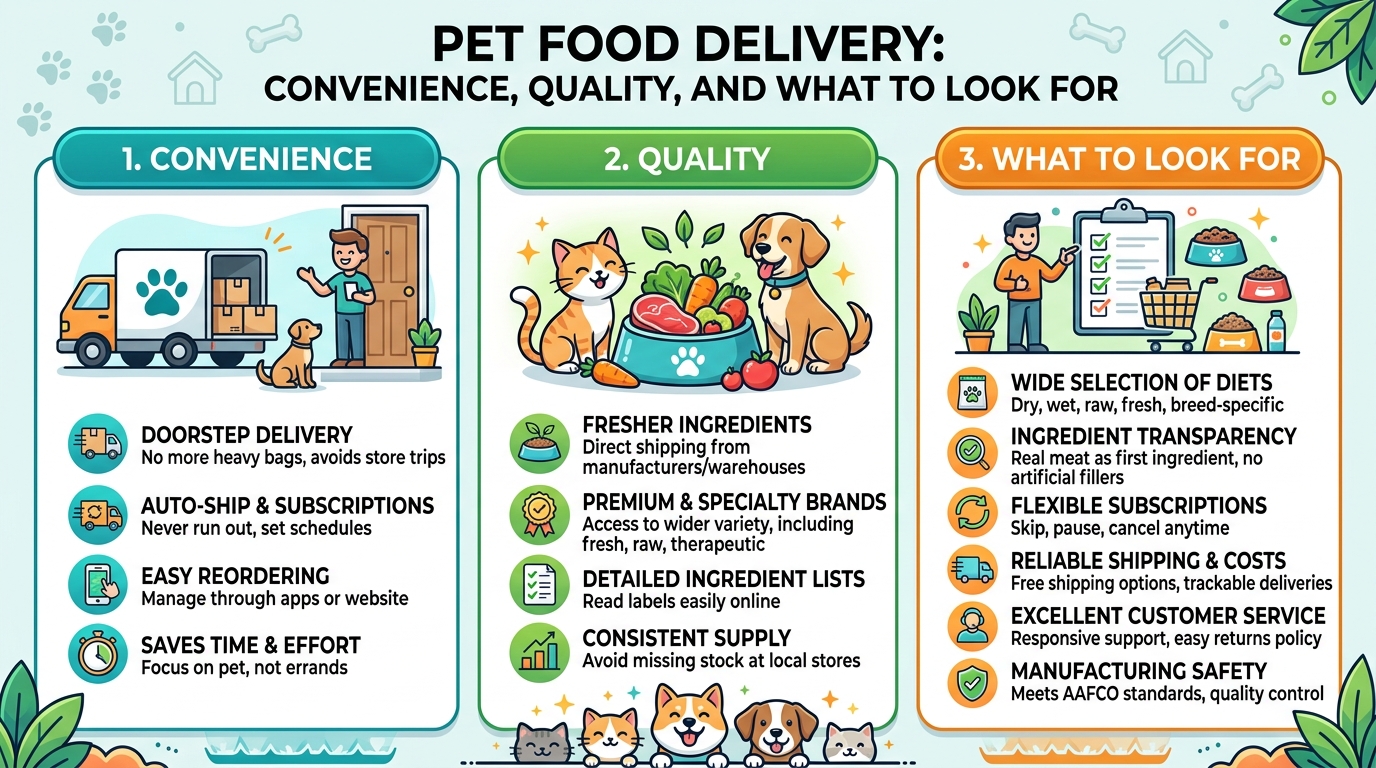
Pet food delivery has become a fast-growing trend in modern pet care, offering dog owners a simple way to ensure their pets receive consistent, high-quality nutrition without frequent store visits. In 2025, these services are more advanced than ever, combining subscription models, customized meal plans, and doorstep delivery. Instead of last-minute shopping or carrying heavy food bags, pet owners can now manage everything online. This shift is not just about convenience—it is also about better nutrition, improved planning, and more reliable pet health management.
Convenience of Pet Food Delivery Services
The biggest advantage of pet food delivery is convenience. These services allow pet owners to set up recurring deliveries so they never run out of food. Meals or kibble arrive directly at the doorstep on a fixed schedule, saving time and effort. This is especially helpful for busy households or people who travel frequently.
Many services also offer flexible subscription plans where delivery frequency can be adjusted based on the pet’s eating habits. This reduces the stress of emergency store runs and ensures pets always have access to fresh food.
Quality and Nutritional Value of Delivered Pet Food
Quality is one of the most important factors in pet food delivery services. Many providers focus on using human-grade ingredients, fresh meats, and balanced nutrition designed by veterinary experts. High-quality services avoid artificial preservatives, fillers, and low-grade ingredients that can harm long-term health.
Some premium services even customize meals based on a dog’s breed, age, weight, and activity level. This personalized approach helps improve digestion, energy levels, and overall health. Nutrition is often formulated to meet official standards like AAFCO guidelines to ensure safety and completeness.
Types of Pet Food Delivery Options
Pet food delivery is not limited to one type of food. There are several options available depending on your pet’s needs. Fresh-cooked meals are popular because they closely resemble home-cooked food and use high-quality ingredients. Freeze-dried and raw food options are also available for owners who want a more natural diet.
Dry kibble delivery remains the most affordable and convenient option, offering long shelf life and easy storage. Wet food subscriptions are also available, providing higher moisture content that can support hydration and urinary health.
What to Look for in a Pet Food Delivery Service
Choosing the right pet food delivery service requires careful consideration. One of the most important factors is ingredient quality. Look for services that use real meat as the primary ingredient and avoid artificial additives or by-products. Transparency in sourcing is also a strong indicator of quality.
Another key factor is nutritional balance. A good service should meet your dog’s specific dietary needs, including age, health condition, and activity level. Veterinary approval or expert-formulated recipes add extra reliability. It is also important to check if the food meets AAFCO or similar safety standards.
Packaging, Storage, and Delivery Flexibility
Packaging plays a major role in maintaining food freshness. High-quality services use sealed, easy-to-store packaging that preserves nutrients and prevents spoilage. Some also use eco-friendly packaging to reduce environmental impact.
Delivery flexibility is another important aspect. The best services allow users to change delivery schedules, pause subscriptions, or adjust portion sizes easily. This ensures that food supply always matches the pet’s actual consumption needs without waste.
FAQs
What is pet food delivery service
Pet food delivery service provides dog food directly to your home through online ordering and scheduled subscriptions for convenience and consistency.
Is pet food delivery better than store-bought food
It can be better in terms of quality and customization because many services offer fresh ingredients and vet-formulated meals.
Is pet food delivery expensive
It is usually more expensive than regular store-bought food, but it offers higher quality, convenience, and personalized nutrition.
How do I choose the best pet food delivery service
Look for ingredient quality, veterinary approval, nutritional balance, and flexible delivery options before choosing a service.
Do pet food delivery services meet safety standards
Yes, many reputable services follow strict nutritional guidelines such as AAFCO standards to ensure food safety and quality.
Conclusion
Pet food delivery services are reshaping modern pet care by combining convenience, quality nutrition, and personalized feeding solutions. They save time, reduce effort, and ensure pets receive balanced meals tailored to their needs. In 2025, choosing the right service means focusing on ingredient quality, safety standards, and delivery flexibility. As this industry continues to grow, it is becoming an essential part of responsible and modern pet ownership.
Leave a Reply