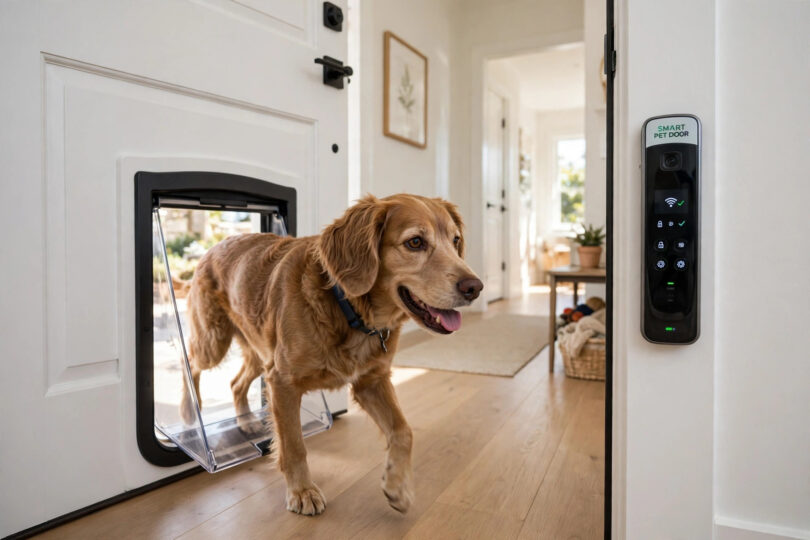

Every dog owner knows the dilemma: your dog wants to go outside, but you cannot leave the door open all day, and a basic flap lets in draughts, rain, neighbourhood cats and occasionally much worse. Smart pet doors solve that dilemma with technology that recognises your dog and only opens for it. Using a microchip, a collar tag or a phone app, smart pet doors give your dog freedom to come and go while keeping your home secure, draught-free and under your control. This guide explains how smart pet doors work, which type suits your home, how to install one, and how to train your dog to use it happily.
How Smart Pet Doors Recognise Your Dog
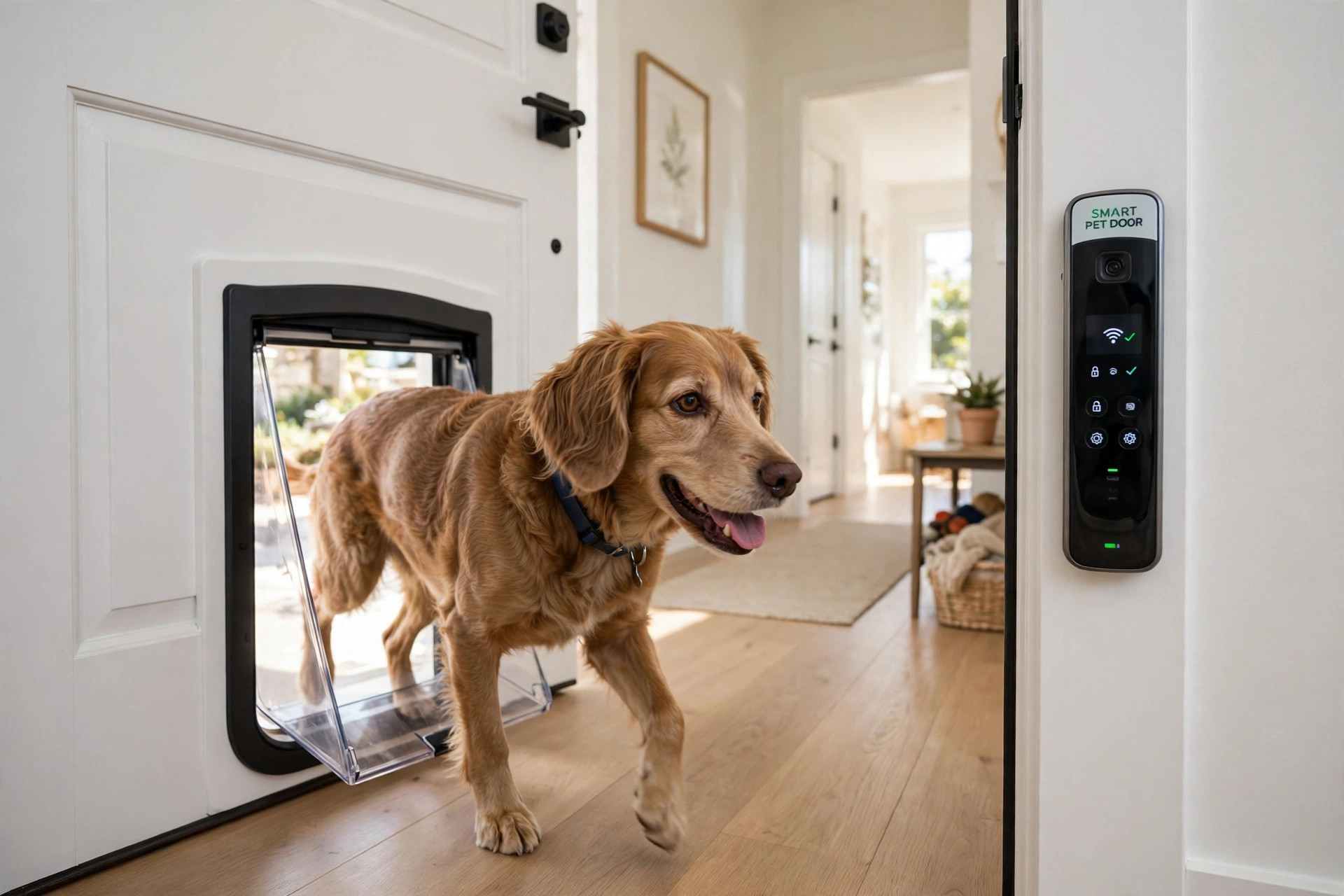
The clever part of smart pet doors is selective entry. The most common design reads your dog’s existing veterinary microchip, so there is nothing extra for your dog to wear and nothing to lose. When your dog approaches, the scanner reads the chip and unlocks the flap for a few seconds. Other models use a small tag on the collar, which works the same way but can be lost or chewed, and app-connected models let you lock or unlock the door from your phone and set curfews, for example keeping the door locked at night even for your own dog.
Good smart pet doors also solve the draught problem that makes ordinary flaps unpopular. Because the flap stays locked shut until an authorised animal approaches, wind cannot push it open, and many models add magnetic seals and double flaps for insulation. That makes a real difference to heating bills in winter and to comfort generally. Some models also record entries and exits, so the app can show you when your dog went out and came back, which is surprisingly useful if you are trying to work out whether a toilet-training accident was your fault or the dog’s.
Choosing the Right Door for Your Home
Start with the fitting location. Most smart pet doors are designed for a standard wooden or uPVC door, but fitting one into glass, brick or a wall needs a different model and sometimes a professional installer, so check before you buy. Measure your dog’s shoulder height and width, and choose a flap your dog can walk through comfortably without crouching; a flap that is too small will put your dog off using it entirely. For large breeds, check the maximum pet size carefully, because many popular models top out at medium dogs.
Next, decide which features you actually need. Microchip recognition is the single most useful feature for multi-pet homes, because it can keep the cat in while letting the dog out, or vice versa, and it stops stray animals entering. App control is worth having if you work irregular hours or want curfews, but it adds cost and needs a reliable home Wi-Fi signal near the door. Battery models are simpler to fit but need regular battery changes, while mains-powered models are more reliable but need a nearby socket. If you already use a GPS dog tracker for outdoor adventures, a smart pet door covers the other half of the story: safe, controlled freedom at home.
Installation: What to Expect
Fitting a smart pet door into a wooden door is a job many confident DIYers can do in an hour or two with a jigsaw and a template, which most manufacturers include. You cut the opening, fit the frame, seal the edges against weather, and test the scanner with your dog’s chip before finishing. Glass doors are a different matter: cutting toughened glass is not a DIY job, and you will need a glazier to fit a new pane with a pre-cut hole. Wall installations need a tunnel kit and careful checking for pipes and cables, so most owners use a professional for those.
Whichever route you take, test the lock before you let your dog use the door unsupervised. Walk your dog through on a lead the first few times, and check that the flap locks behind it and that unrecognised animals cannot push through. A small number of very determined intruder cats learn to tailgate behind a dog, so if that becomes a problem, choose a model with a faster locking mechanism or a selective-entry setting that only unlocks for one specific chip at a time.
Training Your Dog to Use It
Most dogs learn a smart pet door within days, but a few need patience. Start by taping or propping the flap open so your dog gets used to the opening without the noise or resistance of the flap. Lure it through with treats, then let the flap rest gently on its back as it passes, then finally let the lock engage. Never push your dog through or trap it in the flap; one frightening experience can undo a week of progress. Nervous dogs do better with the flap held open for several short sessions across a few days rather than one long session. If your dog already uses a dog travel gadget like a car restraint without fuss, it will probably take to a smart pet door quickly too, since it is already used to new equipment.
Security, Weather and Peace of Mind
Security is the main reason to choose a smart door over a basic flap. A locked flap cannot be pushed open from outside by a person reaching through, and selective entry keeps out strays that would otherwise eat your dog’s food or spray in your home. Some app-connected models also send an alert when the door is used, so you know your dog is safely back inside even when you are at work. That small notification brings real peace of mind on long days away from home.
Weatherproofing deserves a mention too. Look for models with draught excluders, rain covers and a sturdy frame that does not warp in heat or cold. In exposed locations, a tunnel extension or external cover helps keep wind and rain out of the mechanism, which protects the electronics and extends the door’s life. As with all pet tech, a smart pet door works best when it is fitted well and maintained: wipe the scanner lens occasionally, check the seal each season, and replace batteries before they run flat rather than after.
Are Smart Pet Doors Worth It?
For most dog owners with a garden, yes. Smart pet doors remove the constant door duty that interrupts work, sleep and evenings out, and they give dogs the independence that keeps them calmer and better toilet trained. Dogs that can go out when they need to are less likely to have accidents indoors and less likely to develop the restless behaviour that comes from being shut in too long. Owners gain a warmer, more secure home and one less daily chore.
They are not for every home: rented properties may forbid cutting doors, very large dogs may outgrow most models, and flats without garden access have no use for one. But if you own your home and your dog has garden access, smart pet doors are one of the most practical pet tech purchases available. Choose microchip recognition if you can, fit it properly, train patiently, and your dog will wonder how it ever lived with a human doorman.