
Scam betting sites copy real website designs. They use stolen logos, web addresses that look the same, and fake SSL badges. This can trick people, and they may lose money that they can’t get back. You can spot these sites in a few ways. Check who owns the website. See how fast they pay out withdrawals. Make sure their license number is real by matching it with the names on the official regulator list.
The online gambling world moves fast now. But there are some bad people in it who try to take money from folks who bet on sports. These days, it can be harder to spot the scams. Rogue sites do not look old or risky all the time anymore. These scammers copy the look of trusted sportsbooks. They use the same layout and take logos from big gambling places. They want people to believe the site is real.
To keep your money and information safe from fake sites, you can use a trusted Scam Verification Spot (먹튀스팟). This spot helps you find out who owns the site. You can check if they have the right license for it. You can also see what other people say about the site. Do all this before you put in any real money. Knowing how these scams work is a good way to stay far from them.
The Illusion of Legitimacy: How Rogue Sites Dupe Bettors
Fake sportsbooks and casinos use tricks to fool people. They play with how you feel and what you see. This is because most people decide if a site is safe just by its look. Scammers know this, so they spend a lot to copy the style of good brands.
Source _Gemini
1. Domain Spoofing and Lookalike URLs
Scammers set up web addresses that look a lot like real brand names. They might change a letter or use an ending like .top, .xyz, or .cc. These “typosquatting” names fool people. You can get there by clicking search ads or links shared in groups on social media.
2. Fake Security Badges and Decorative Seals
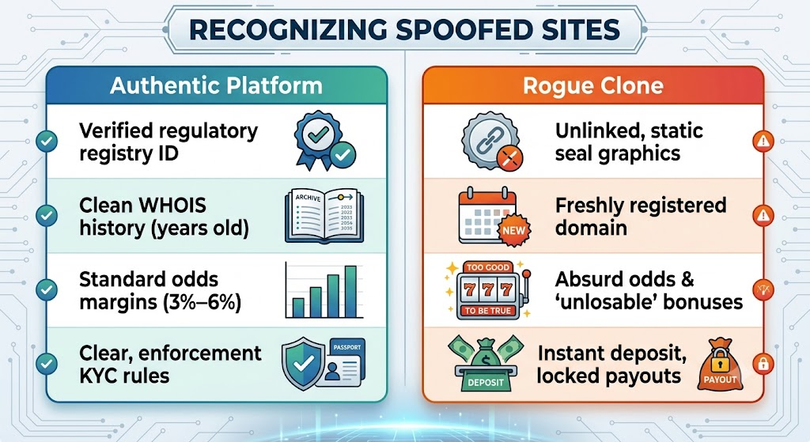
Some people try to fool you by putting pictures of licensing seals, like Malta Gaming Authority or Curaçao eGaming, at the bottom of the website. On real websites, if you click these seals, you go to a live page on the official regulator’s site to see if things are right. On fake websites, these badges are only pictures and you cannot click on them.
3. Aggressive Bonus Baiting
Some betting sites want people to act fast without thinking. They give offers that look great, but sometimes they are not real. For example, they may show a 500% deposit match without any rollover or say that you will win for sure. A report about digital consumer safety from Forbes says scams like this work well because they make people feel like they need to hurry. When people feel this rush, they often skip normal safety steps.
Technical Red Flags: How to Inspect a Betting Site Yourself
You might be able to make a design look good on the outside, but you cannot cover up the real technical parts if someone takes a close look.
Check WHOIS Domain Creation Dates
Many scam sites often show up on new website domains. You can use a public WHOIS lookup tool to see the date when the domain was made. If a site says it has been around for ten years, but the domain was made just two weeks ago, then it is not one you should trust.
Verify SSL Certificates and Encryption Details
Do not trust just the padlock in your browser’s address bar. Scam sites can get basic SSL certificates for free, too. You should click the padlock to see who gave the certificate. Check if it is from a trusted Security Authority.
Audit Payout Policies and KYC Rules
Some scam sites let you put in money fast. You can pay easily, and they may not even ask for your ID. But if you want to take your money out, these sites can freeze what you have or ask you to pay big “processing fees” before you get it back. Official consumer groups, like the Federal Trade Commission (FTC), say if a site wants extra fees before giving you your money, it is an advance-fee scam.
5 Practical Steps to Protect Your Betting Capital
- See if They Have a License Yourself: Copy the license number that you see on the sportsbook. After that, search for it on the main website of the government group that gives out licenses.
- Don’t Click Random Website Links: Type in the real website address or use bookmarks you trust in your browser to go to betting websites.
- Try Taking Out a Little Money First: Put in a small amount of money. Right away, ask to take out just a little. This helps you know how fast they pay and what you need to do.
- Look for Blacklists from the Community: Go read forums or see blacklists online. See if people say they have problems getting their money or feel like things are not fair.
- Turn On Two-Factor Login (2FA): Always use 2FA for your betting and email to keep other people out of your account who should not have it.
Conclusion
Knowing if a sports betting site is real or a fake one is about more than just the way it looks. You need to look at its technical safety. It is good to see when the website was made for the first time. Try their way of paying out money, and check their licenses with the groups that give them out. This helps keep your money out of the hands of bad people. Before you bet, always look at a trusted Scam Verification Spot (먹튀스팟). This spot tells you about new scam sites, blocked sites, and places that are safe to bet.