
Why Feeding Routines Matter More Than Most Dog Owners Realise
A dog’s day is built around routines. Walks happen at familiar times, sleep follows familiar patterns, and meals anchor the whole schedule. When feeding times drift — a late meeting, a traffic delay, a forgotten scoop — dogs notice immediately. Some become anxious, some beg constantly, and some eat so quickly when food finally arrives that they make themselves sick. A smart pet feeder does not replace an owner, and it does not replace care. What it does is protect the routine when life gets in the way, delivering the right amount of food at the right time, every time.
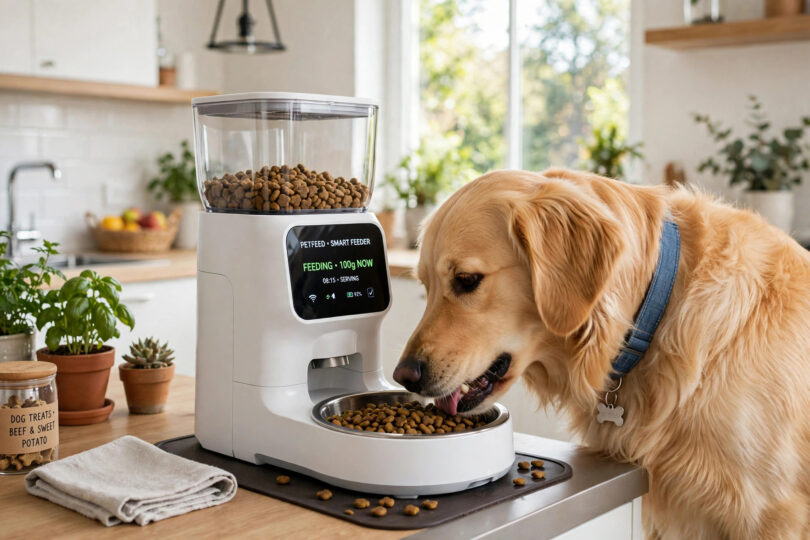
Smart pet feeders have moved far beyond a simple timer and a plastic hopper. Modern models connect to your phone, weigh or measure portions accurately, record every meal, send alerts when food runs low, and in some cases include a camera so you can check in while your dog eats. Used properly, they support weight control, calmer behaviour, and a healthier daily rhythm. This guide explains how automatic feeding helps dogs stay healthy, what features actually matter, and how to introduce a feeder without confusing or stressing your pet.
What Is a Smart Pet Feeder?
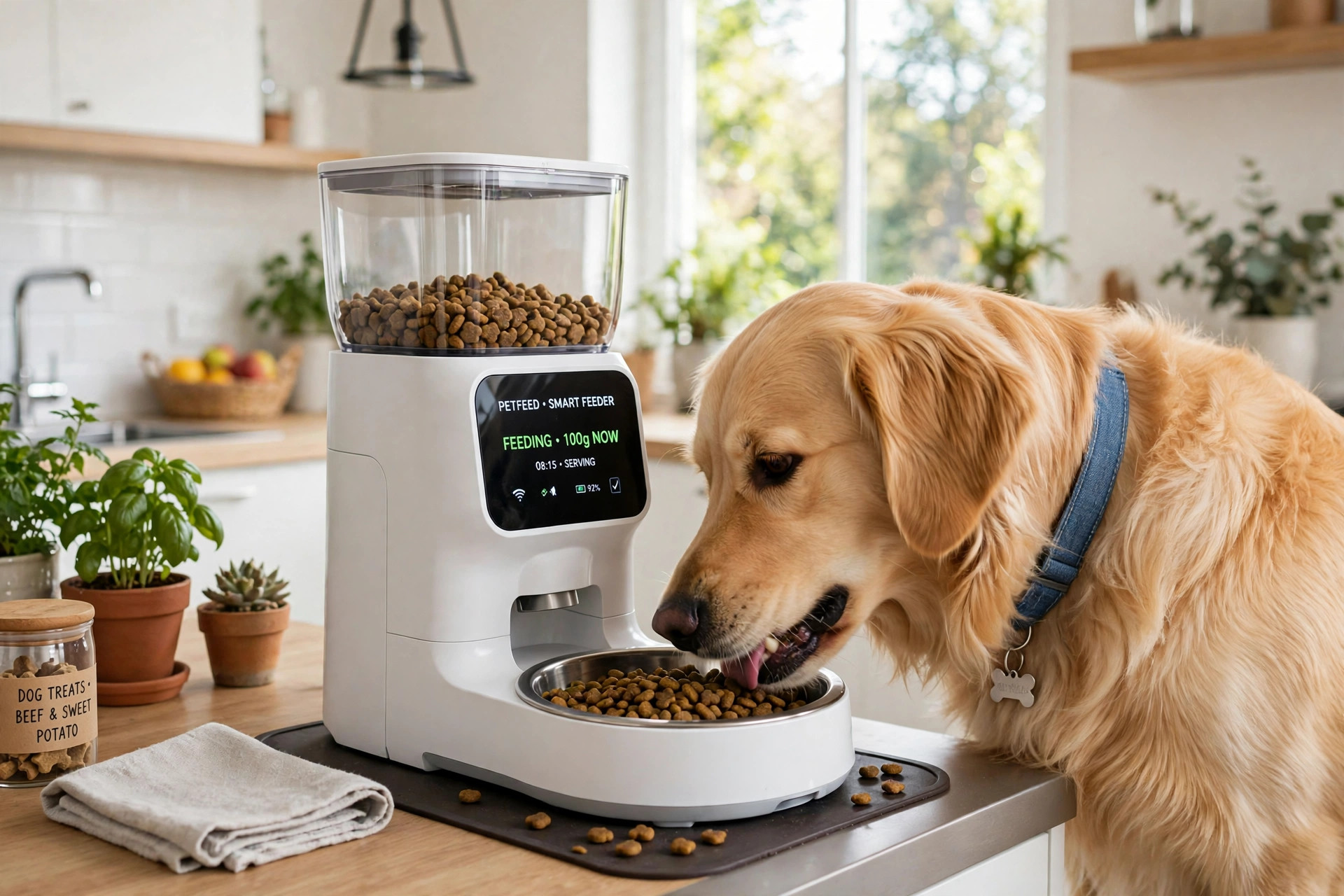
A smart pet feeder is an automatic food dispenser with a brain. Food is stored in a sealed container, and the device releases a programmed portion into a bowl at scheduled times. The “smart” part is the control layer: an app on your phone, portion programming measured in grams or cups, feeding logs, low-food notifications, and often battery backup so a power cut does not mean a missed meal.
Some feeders serve dry kibble only, which suits most dogs. Others handle semi-moist food or include ice packs and refrigeration for fresh diets. Higher-end models add a built-in camera, two-way audio, and portion scales that weigh each serving. If you are exploring connected devices for your dog more broadly, it helps to see feeders as one part of a wider ecosystem of futuristic pet care tools that now covers feeding, monitoring, play, and health tracking.
Benefit 1: A Consistent Schedule Your Dog Can Trust
Dogs thrive on predictability. A feeder that dispenses breakfast at 7 a.m. and dinner at 6 p.m. — exactly, every day — removes the uncertainty that drives a lot of food-related anxiety. Dogs that are fed at irregular times often develop habits owners find difficult: dawn barking, cupboard-scratching, following people around the kitchen, and scavenging on walks. Much of that behaviour is a response to uncertainty, not disobedience.
Consistency also helps the digestive system. Regular meal times regulate stomach acid production, bowel habits, and energy levels across the day. Puppies in particular benefit, because they usually need three or four smaller meals spaced evenly, and a feeder can deliver the midday meal when everyone is at work or school. Senior dogs benefit too: smaller, more frequent meals are often easier on an older digestive system than two large ones.
Benefit 2: Portion Control and Healthier Weight
Obesity is one of the most common health problems in pet dogs, and overfeeding by small amounts each day is usually the cause. A “heaped scoop” can easily contain 20 to 30 percent more kibble than intended. Over months, that surplus becomes extra kilos, and extra weight raises the risk of joint problems, diabetes, breathing difficulties, and a shorter lifespan.
A smart feeder removes the guesswork. Once you set a portion — ideally based on your veterinarian’s advice and the calorie content of your dog’s food — the feeder repeats it precisely. There is no double-feeding either, a classic problem in busy households where two people each assume the other has not fed the dog yet. The feeding log in the app shows exactly what was served and when, so everyone in the home can check before reaching for the scoop.
Portion control works even better when combined with activity data. Owners who use smart pet trackers for dogs can see how much their dog actually moves each day and match food intake to real exercise, rather than to the optimistic estimate most of us carry in our heads. Food in, energy out — when both sides of that equation are measured, weight management stops being a guessing game.
Benefit 3: Slower, Calmer Mealtimes
Some dogs inhale food. Fast eating can cause choking, vomiting, and in large, deep-chested breeds it is associated with bloat, a dangerous condition. Many smart feeders can split a meal into several small releases a few minutes apart, effectively turning one large serving into a series of small courses. The dog still gets the full portion, but is forced to pause between mouthfuls.
Scheduled feeding also calms the hour before meals. Dogs learn quickly that food arrives from the feeder at a set time, not from pestering a person. The frantic pre-dinner routine — pacing, whining, staring — often fades within a couple of weeks, because the dog’s begging no longer changes anything. The feeder does not respond to pressure, and dogs adjust fast.
Features That Actually Matter
Marketing lists for feeders are long, but only a handful of features change daily life. Prioritise these:
Accurate portioning. Look for feeders that dispense consistently with different kibble sizes, and check reviews for jamming. A feeder that regularly fails to deliver is worse than no feeder.
Battery backup. Mains power fails occasionally. A battery backup keeps the schedule running and is essential if the feeder is your dog’s meal source while you are out.
Food freshness. A sealed hopper with a desiccant pack keeps kibble from going stale and keeps curious noses — and paws — out. Capacity matters too: a feeder holding several days of food suits most households.
App alerts. Low-food warnings, jam alerts, and confirmation that a meal was served give you confidence when you are away from home.
Easy cleaning. Bowls and food-contact parts should come out and wash easily. Hygiene is a health feature, not a cosmetic one.
A camera is nice to have, and genuinely useful for anxious owners, but it ranks below reliability, portion accuracy, and backup power.
How to Introduce a Feeder Without Stress
Most dogs accept a feeder within a few days if the change is gradual. Start by placing the feeder next to the normal bowl, switched off, and feed from the usual bowl for a day or two so the new object becomes boring. Next, let the feeder dispense one meal while you are home, and stay nearby without making a fuss. The sound of kibble landing in the bowl is a powerful advert by itself.
For nervous dogs, hand-feed a few pieces near the feeder, or let the first dispensed meals be small and extra tasty. Avoid forcing your dog toward the device. Within a week, nearly all dogs associate the feeder’s sound with food and come running — in a good way.
Keep fresh water available at all times, in a separate bowl or a pet water fountain. A feeder handles food only, and hydration should never depend on a schedule.
Common Mistakes to Avoid
The biggest mistake is setting the portion by eye. Weigh your dog, read the calorie guidance on the food, and ask your veterinarian for a daily target if you are unsure. Then review your dog’s weight monthly and adjust the portion in small steps.
Second, do not fill the hopper and forget the device for weeks. Clean the bowl frequently, wash the hopper between refills, and check that old kibble is not sitting at the bottom. Third, keep a manual backup plan: a neighbour, family member, or pet sitter who can step in if technology ever fails while you travel. Smart devices reduce risk; they do not remove the need for a safety net.
Finally, remember that feeding is also bonding. Use the time the feeder saves for training, play, grooming, and walks — the parts of care no device should replace.
Who Should Buy a Smart Pet Feeder?
A smart feeder suits owners with unpredictable working hours, dogs on a strict weight-management plan, puppies needing midday meals, and multi-person households where double-feeding keeps happening. It is also a genuine help for owners with limited mobility, for whom measuring and carrying food several times a day is difficult.
If your schedule is completely regular and your dog is a healthy weight, a feeder is a convenience rather than a necessity — but it is a convenience most owners say they would not give up once they have it.
Conclusion
A smart pet feeder protects the two things dogs depend on most: routine and the right amount of food. Consistent meal times calm anxious behaviour, precise portions prevent the slow weight gain that shortens lives, and app logs and alerts give owners confidence wherever they are. Choose reliability, portion accuracy, and battery backup first, introduce the device gradually, and keep up the human parts of care. Do that, and automatic feeding becomes one of the simplest upgrades you can make to your dog’s daily health.