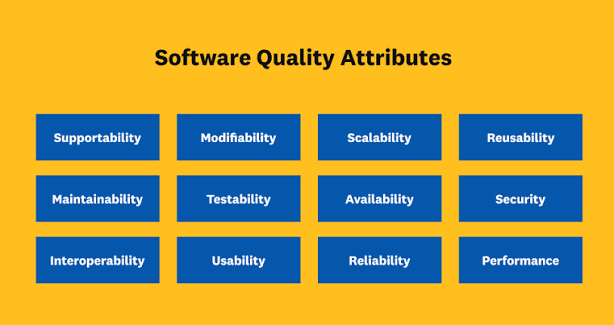

The most useful drovenio software development tips are not limited to learning a fashionable framework or copying code from an automated assistant. Strong software is built through repeatable habits: understanding the problem, choosing clear designs, writing readable code, testing important behavior, protecting data, and improving systems after real users begin interacting with them. These habits remain valuable even as languages and tools change.
Developers often feel pressure to move quickly, but speed without structure creates technical debt. A feature that is completed in one day can cost weeks later if it is difficult to test, secure, or modify. Sustainable development balances delivery with maintainability so teams can continue improving a product without breaking earlier work.
Strengthen Fundamentals Before Chasing Tools
Programming fundamentals make new technologies easier to learn. Data structures, algorithms, networking basics, databases, operating systems, and object-oriented or functional design principles help developers understand why code behaves as it does. Framework knowledge is valuable, but it should sit on top of problem-solving ability.
Before writing code, clarify inputs, outputs, constraints, error cases, and performance requirements. Breaking a problem into smaller parts often reveals simpler solutions. A short written design can prevent unnecessary complexity and create a shared understanding across the team.
Write Code for People as Well as Machines
Readable code reduces mistakes and makes collaboration easier. Names should explain purpose, functions should remain focused, and repeated logic should be extracted carefully. Comments are most useful when they explain why a decision was made, not when they merely repeat what the code already shows.
Consistency matters more than personal preference. Teams should agree on formatting, file organization, naming, review practices, and documentation. Automated formatters and linters can handle routine style checks, allowing code review to focus on behavior, architecture, security, and maintainability.
Test Important Behaviour Early
Testing should begin during development rather than immediately before release. Unit tests can protect focused logic, integration tests can verify that components work together, and end-to-end tests can cover critical user journeys. Not every line needs an identical level of testing; priority should be based on risk and business importance.
A good test describes expected behavior clearly and remains stable when internal implementation changes. Teams should also test failure conditions, permissions, invalid input, timeouts, and recovery. Monitoring after deployment completes the feedback loop by showing how the system performs in real conditions.
Use Version Control, Reviews, and Automation
Version control is more effective when changes are small and commit messages explain intent. Focused pull requests are easier to review than large bundles containing unrelated modifications. Constructive reviews should identify risks, ask questions, and share knowledge rather than simply approve syntax.
Continuous integration can automatically run tests, security checks, builds, and quality rules. This reduces manual errors and provides fast feedback. Deployment automation should include rollback planning, environment configuration, and clear ownership so a failed release can be handled safely.
Security and AI-Assisted Development
Security should be considered from the beginning. Validate input, protect secrets, apply least-privilege access, update dependencies, and record important events without exposing private data. Threat modeling is useful even for small projects because it encourages developers to think about how a feature could be misused.
AI coding tools can assist with boilerplate, tests, documentation, and debugging ideas, but generated code still requires review. Developers remain responsible for correctness, licensing, privacy, security, and performance. The best use of AI is to support informed engineering, not replace understanding.
Conclusion
Long-term development skill comes from combining solid fundamentals with disciplined teamwork. Clear designs, readable code, targeted testing, version control, automation, monitoring, security, and continuous learning all contribute to reliable software. These practices help teams deliver faster because they reduce rework and make change safer.
For additional discussions about development, technology tools, artificial intelligence, and digital systems, readers can explore droven.io. Building dependable software is not a single technique; it is the result of good decisions repeated throughout the entire product lifecycle.