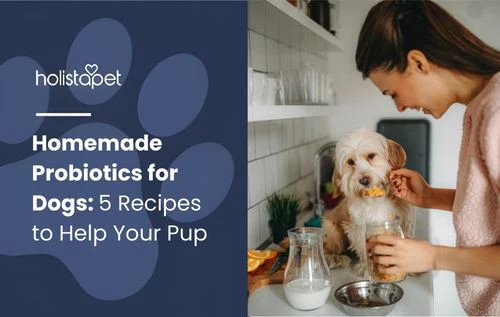

If you spend any time reading dog nutrition labels, you’ve probably seen the word “probiotics” everywhere. It shows up on supplements, powders, chews, and even some treats. But plenty of dog owners are not looking for another tub or packet on the counter. They want food-based ideas they can make at home, using ingredients they already know and trust.
That is where homemade probiotic recipes come in.
For many healthy dogs, small amounts of plain cultured foods such as yogurt or kefir can be used in homemade treats or meal toppers. These foods contain live microorganisms that may support digestive balance, especially during routine changes like travel, mild stress, or a switch in food. Veterinary and canine nutrition sources also note that probiotics are commonly used as part of digestive support, particularly for diarrhea and gut upset, although they are not a cure for every stomach problem.
What Homemade Probiotics for Dogs Really Means
Homemade probiotics for dogs are usually food-based recipes made with ingredients that contain live active cultures. The most common examples are plain yogurt, plain kefir, and cultured goat’s milk. These are often mixed with dog-friendly ingredients like pumpkin or banana to make frozen treats, lick mats, or small toppers.
One thing to keep in mind is that not every cultured food counts as a useful probiotic source. The AKC notes that some yogurt cultures are involved in the manufacturing process without acting as live probiotics in the finished product, so labels matter. Plain, unsweetened products with live cultures are the safer place to start.
That distinction matters because many owners hear “gut health” and assume any trendy fermented food will do the job. It won’t. Some fermented foods are too salty, too seasoned, or simply not appropriate for dogs. Homemade probiotic recipes work best when they stay simple and dog-safe.
Why Dog Owners Like Food-Based Probiotic Options
There is a practical side to this. Homemade recipes let you see every ingredient that goes into your dog’s bowl. That can be helpful for dogs who do better with limited ingredients or for owners who want a small, occasional gut-support treat instead of a daily supplement.
There is also the portion side. A homemade probiotic treat can be given in tiny amounts. That makes it easier to test how your dog reacts before adding anything regularly. Even good ingredients can cause issues if you serve too much, too soon. Dairy can be one of them, especially for dogs that do not tolerate lactose well.
For pet parents who enjoy DIY recipes, Pretty Fluffy has a useful collection of homemade probiotics for dogs that turn live-culture ingredients into easy frozen treats. The recipes lean into familiar kitchen staples and keep the format friendly for dog owners who want something simple to make at home.
The Best Ingredients to Use
The safest homemade probiotic recipes tend to revolve around a short list of ingredients.
Plain Yogurt
Plain yogurt with live active cultures is one of the best-known choices. It is easy to find, simple to portion, and can work well in frozen molds or stirred into food in small amounts. The important part is what is not in it. Dogs should not have flavored yogurt, added sugar, or artificial sweeteners. Xylitol, in particular, is toxic to dogs.
Plain Kefir
Kefir is another common option. It is a fermented milk drink with live cultures and is often mentioned alongside yogurt in canine probiotic guidance. Many dog owners like kefir because it is easy to mix into food or freeze into bite-sized treats.
Cultured Goat’s Milk
Cultured goat’s milk appears in a lot of dog recipes as well. Some owners find it easier for their dogs to handle than standard dairy, though individual tolerance still matters. It can be used in small portions in the same way as kefir or yogurt. This is still a treat-style add-on, not a free-pour ingredient.
Supportive Add-Ins
Pumpkin, banana, and similar add-ins show up often in DIY probiotic recipes. They do not act as probiotics on their own, but they pair well with cultured foods and can help round out texture and taste. Pumpkin is especially popular in dog recipes because it is widely used in bland diets and digestive-friendly treats.
What to Leave Out
This part is easy to skip, but it matters just as much as the recipe itself.
Do not use sweetened yogurt. Do not use flavored yogurts with syrups or fruit mixes. Do not use anything containing xylitol. Many human probiotic foods are made with ingredients that are fine for people and a poor fit for dogs.
You also want to skip heavily seasoned fermented foods meant for human meals. Garlic, onion, excess salt, and spicy add-ins are obvious no-gos. Even when a food is trendy in human gut-health circles, that does not make it dog-friendly.
A good rule is this: if the ingredient label reads like dessert, it does not belong in your dog’s probiotic treat.
How to Start Without Upsetting Your Dog’s Stomach
When people hear “good bacteria,” they sometimes assume more is better. In real life, a big serving of yogurt or kefir can leave a dog with the exact problem the owner was hoping to avoid.
Start with a very small amount. Think spoon-tip, not bowlful. Then watch for changes over the next day or so. Stool quality, gas, appetite, itching, or stomach noise can all tell you whether that ingredient suits your dog. This matters even more for small breeds, seniors, and dogs with a history of food sensitivity. Cornell’s canine health center notes that probiotics can be useful in dogs, but gut issues that persist, worsen, or come with vomiting, pain, or lethargy call for veterinary attention rather than more experimenting at home.
Frozen treats are often the easiest way to portion homemade probiotics. A small silicone mold or even a spoonful spread on a lick mat keeps serving size under control. That is one reason these recipes appeal to many owners. They feel manageable.
When Homemade Probiotics Make Sense, and When They Don’t
For a generally healthy dog, homemade probiotic treats can fit nicely into a routine. They may be worth trying after a minor feeding change, during mild stress, or as an occasional gut-friendly snack. The key is to keep expectations realistic. Probiotic foods may support digestive balance, but they are not a substitute for a diagnosis.
Some dogs need more than a DIY recipe can offer. Dogs with repeated diarrhea, chronic digestive disease, pancreatitis history, major food intolerance, or immune-related concerns should not be managed with kitchen experiments alone. In those cases, a veterinarian may suggest a canine-specific probiotic product with strains and dosing chosen for dogs, not people.
That does not make homemade options pointless. It just puts them in the right lane. Think of them as a small, thoughtful add-on for the right dog, not a cure-all.
A Simple Takeaway for Pet Parents
Homemade probiotic recipes can be a nice way to support your dog’s routine with real food and simple ingredients. Plain yogurt, kefir, and cultured goat’s milk are the usual starting points, and they work best when served unsweetened, in small portions, and with a close eye on how your dog responds.
If your dog does well with cultured foods, homemade probiotic treats can become one more small ritual in your week. Mix, freeze, serve, repeat. Nice and easy.
If your dog’s stomach is unsettled often, though, it is worth stepping back and asking why. That answer matters more than any recipe.