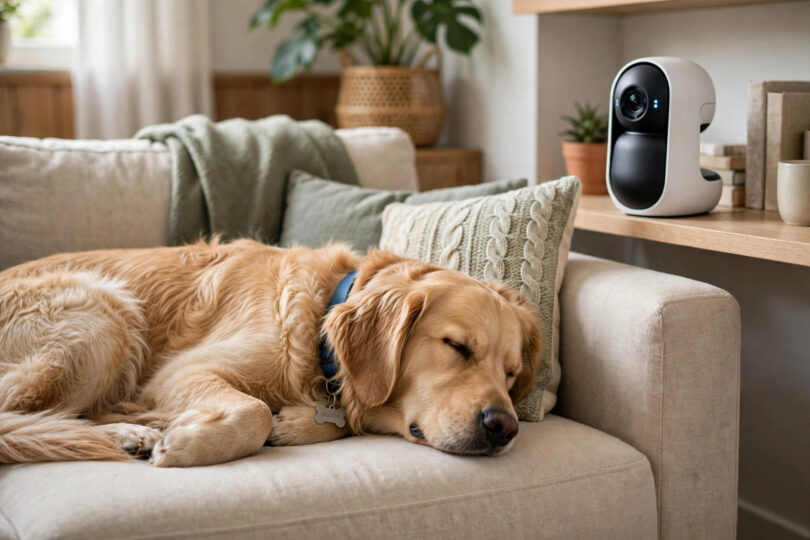

The Quiet Stress Many Dogs Feel When Left Alone
For most dogs, their person leaving the house is the hardest part of the day. Some cope by sleeping until the key turns in the lock. Others do not cope at all. Separation anxiety can show up as barking that neighbours hear but owners never do, scratched doors, chewed furniture, pacing, drooling, loss of appetite, or toilet accidents in a dog that is fully house-trained. Because it happens when nobody is home, owners often discover it late — through a complaint, damaged property, or a dog that seems inexplicably exhausted in the evening.
This is where an AI pet camera changes things. A camera does not cure separation anxiety by itself, but it does three things owners desperately need: it shows what is actually happening, it lets you respond in the moment, and over time it helps you build a training plan based on evidence rather than guesswork. This guide explains how AI pet cameras help reduce separation anxiety in dogs, which features matter, and how to use one as part of a kind, effective routine.
What Makes a Pet Camera “AI”?
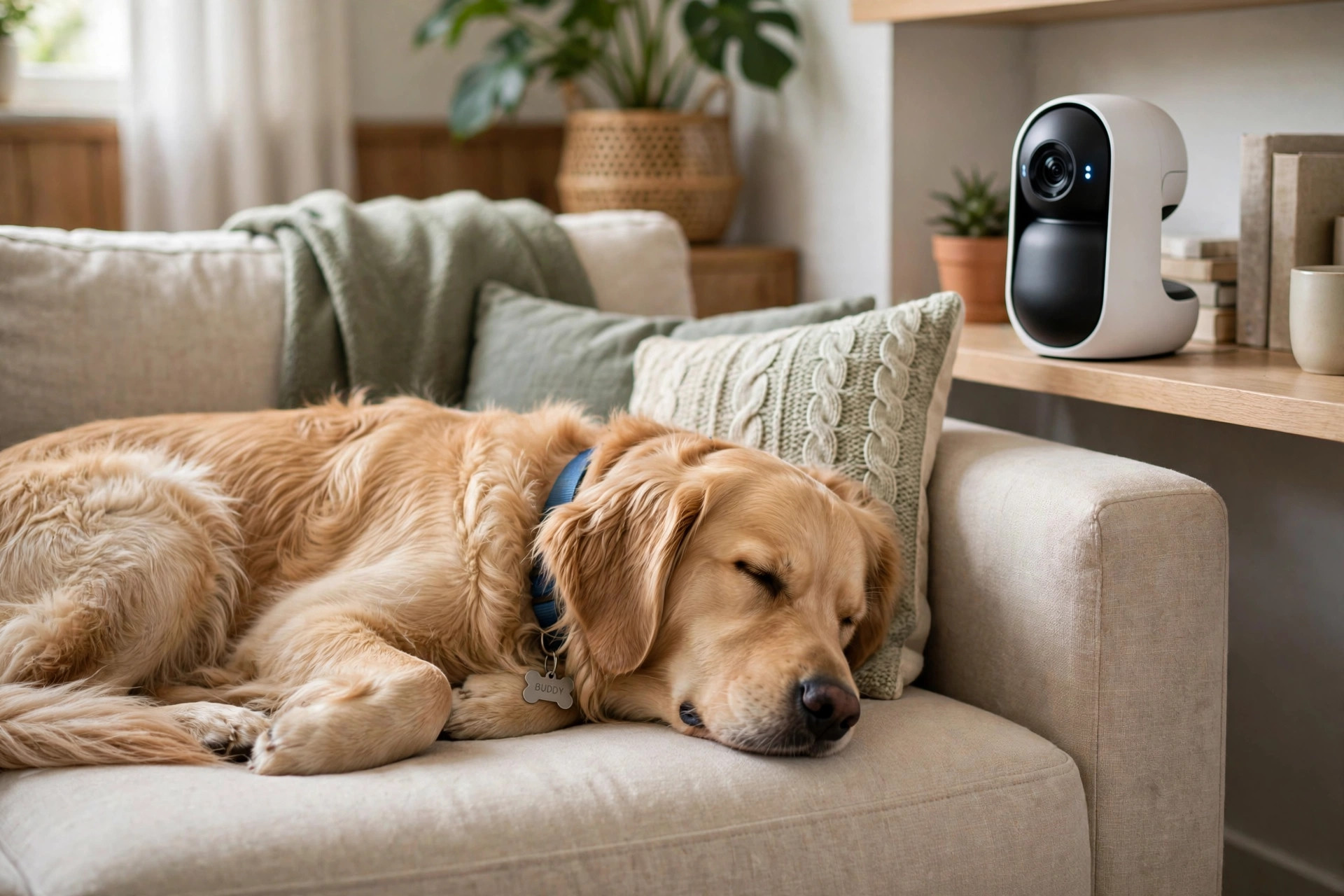
A basic camera streams video. An AI pet camera understands what it is seeing, at least in practical terms. Using on-device or cloud-based analysis, it can tell the difference between a dog, a person, and general movement. It can recognise barking, whining, pacing, and long periods of stillness, and it sends you an alert that says something useful — “barking detected for 3 minutes” — instead of fifty motion notifications caused by sunlight moving across the floor.
Many models also keep a daily activity summary: when your dog was active, when they slept, and when distress behaviours occurred. That timeline is gold for anxious-dog owners, because patterns appear quickly. Perhaps your dog is calm for the first hour and struggles after that. Perhaps Mondays, after a weekend of constant company, are the worst days. You cannot fix a pattern you cannot see.
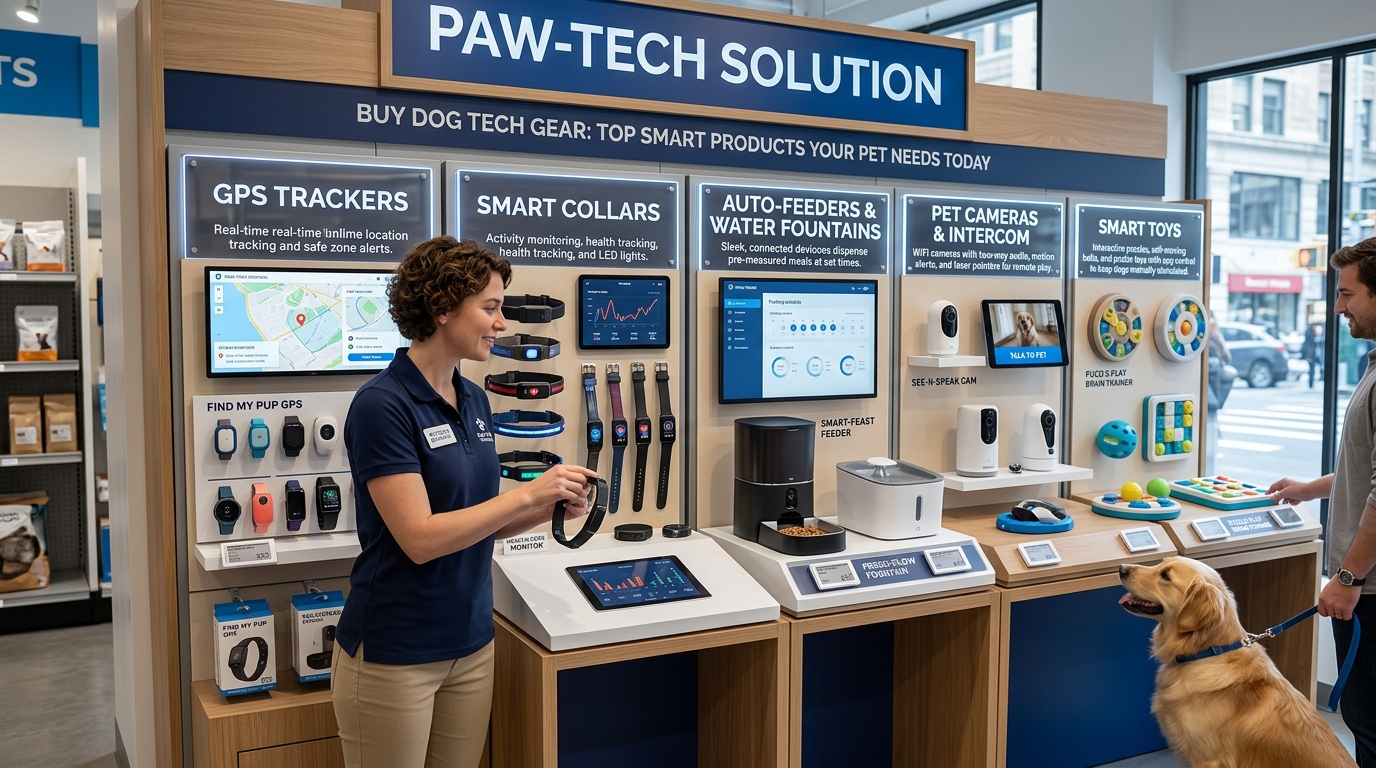
Pet cameras sit naturally alongside other connected devices in the modern smart pet home, from feeders and trackers to the wider range of futuristic pet care tools designed to keep animals healthier and calmer when their owners cannot be in the room.
How a Camera Helps in the Moment
The most immediate benefit is two-way audio. Hearing a familiar voice can interrupt a barking spiral before it builds. A calm, brief “you’re okay, settle down” through the speaker reassures many dogs — especially those whose anxiety is mild to moderate. Some cameras add a treat-tossing feature, which does more than deliver a snack: it gives the dog something positive to associate with being alone, and it redirects attention away from the door.
There is an important caution here. For dogs with severe anxiety, a disembodied voice can occasionally increase confusion — the dog hears you, searches for you, and becomes more distressed. Test two-way audio while you are nearby, watch your dog’s reaction on the camera, and if their stress rises, stop using the voice feature and rely on observation and training instead. The camera’s first job is always to tell you the truth about how your dog feels.
Real-time alerts also protect your home and your relationships. If barking starts, you get a notification within moments, not a note from a neighbour days later. You can come home earlier, ask a friend to drop in, or simply log the episode for your training plan.
Turning Footage Into a Training Plan
Reducing separation anxiety is mostly about gradual desensitisation: teaching the dog, in small steps, that being alone is safe and boring. A camera makes this measurable. Start by leaving for very short periods — minutes, not hours — and watch how long your dog stays relaxed. Build duration only when the current step is genuinely calm. The activity timeline shows you exactly when calm ends, so you stop guessing and stop accidentally pushing too far.
The footage also reveals triggers. Does distress start the second you pick up your keys? When the door closes? Twenty minutes later, when the house goes quiet? Each pattern has a different fix, from practising departure cues without leaving, to leaving enrichment toys and food puzzles that occupy the first difficult half hour.
And if you are working with a veterinarian or behaviourist, camera records are far more useful than a verbal summary. Health professionals increasingly combine behaviour data with physical health data — the same direction as smart diagnostic tools and advanced veterinary care that are transforming how pet health problems are spotted early. Anxiety is a health issue, and clear records lead to better treatment.
Features That Matter for Anxious Dogs
Barking and sound detection. The core AI feature. Look for cameras that specifically flag barking, whining, and howling, with a timeline you can review later.
Clear night vision. Anxiety does not keep office hours. If your dog is alone in the evening, you need footage that is actually watchable in low light.
Wide viewing angle or pan. Anxious dogs move. A wide field of view, or a camera that can pan and tilt from the app, keeps a pacing dog in frame.
Two-way audio. Valuable for many dogs, as discussed above — test it carefully with yours.
Reliable alerts and recording. Fast notifications and either cloud or local recording of events, so you can review episodes instead of relying on memory.
Privacy controls. A physical shutter or a clear off mode matters. The camera watches your dog in your home; you should control exactly when it is active.
Where to Place the Camera
Place the camera where your dog spends their alone time, aimed at the area they use most — usually their bed, the sofa, and the door they watch. Mount it or place it high enough for a wide view, but stable enough that a curious dog cannot knock it down and chew a cable. Check the view from the app before you rely on it: you want the dog’s resting place and the entrance in the same frame if possible.
If your dog has free run of several rooms, one camera in the main living space covers most behaviour. Chasing full-house coverage is rarely necessary; patterns show up in the room where the dog waits.
Building a Calmer Alone-Time Routine
A camera works best as one part of a complete routine. Tire the body first: a proper walk and play session before you leave lowers the energy available for anxiety. Leave something absorbing behind — a stuffed food toy or a safe chew reserved only for alone time, so departures predict good things. Keep arrivals and departures low-key; no long emotional goodbyes, no ecstatic reunions. Calm is contagious, in both directions.
Use the camera to verify that the routine is working. Over two or three weeks you should see the timeline change: shorter barking episodes, longer sleep periods, less pacing. If nothing improves — or things get worse — that is also valuable information, and it is the point at which professional help from a veterinarian or certified behaviourist becomes important. Severe separation anxiety sometimes needs medication alongside training, and there is no shame in that. The camera simply makes the decision clearer, sooner.
Who Benefits Most From an AI Pet Camera?
New rescue dogs, whose alone-time behaviour is completely unknown, are prime candidates — the first weeks set the pattern. So are owners who have received a barking complaint and need facts, owners returning to office work after a long period at home, and anyone mid-way through a desensitisation programme who needs to measure progress honestly.
Even for a dog with no anxiety at all, most owners admit the camera earns its place the first time they check in at lunch and see their dog asleep, upside down, without a care in the world.
Conclusion
An AI pet camera will not train your dog for you, but it removes the blindness that makes separation anxiety so hard to treat. It shows you when your dog struggles, lets you reassure or redirect them in the moment, and turns a vague worry into a clear, measurable training plan. Choose strong barking detection, good night vision, and honest activity timelines, place it where your dog waits for you, and pair it with exercise, enrichment, and gradual practice. Step by step, most dogs learn that alone time is simply another safe, quiet part of the day — and you will have the footage to prove it.