

Australians seeking emergency funding increasingly rely on 1 hour loans online for immediate financial relief. The application process has raised serious concerns about data privacy and consent transparency. Sweeping regulatory changes will fundamentally reshape how fast loan providers handle consumer financial information by mid-2026.
Australia’s Consumer Data Right system is undergoing comprehensive reform following government intervention in August 2024. Borrowers seeking rapid credit access will benefit from clearer consent mechanisms and stronger data protection. These changes also deliver meaningful control over personal financial information sharing.
The Consumer Data Right Framework Explained
The Consumer Data Right establishes a permission-based system for financial data access across designated industry sectors. Lenders typically require verification of income streams and expense patterns when consumers apply for 1 hour loans online. The CDR creates standardised protocols for this data exchange.
Current industry practices frequently rely on screen scraping technology. Consumers provide banking credentials to enable third-party account access. This methodology presents significant security vulnerabilities and often lacks transparent disclosure regarding data collection scope.
The Australian Government’s August 2024 announcement outlined a substantial CDR reset. The initiative prioritises consumer protection through simplified consent architectures. Expanded sectoral coverage now includes non-bank lending institutions directly impacting providers offering expedited loan products.
Statistical analysis reveals that merely 0.31% of banking sector consumers utilised CDR mechanisms as of 2024. This minimal adoption rate highlighted systemic deficiencies requiring immediate regulatory attention.
ACCC Compliance Review Identifies Critical Gaps
The Australian Competition and Consumer Commission’s December 2024 targeted compliance assessment identified substantial gaps in consent flow implementation. The review documented systematic failures in meeting consumer experience guidelines mandated under existing CDR standards.
Critical deficiencies identified include:
- Inadequate disclosure of consent expiration timeframes
- Unnecessarily complex authorisation withdrawal procedures
- Inconsistent data language standardisation
- Interface design elements that impede consumer consent completion
The ACCC has formally designated consent flow compliance as a primary enforcement focus for 2025-2026. Regulatory authorities are specifically monitoring for manipulative design patterns that obscure data sharing implications.
For consumers accessing 1 hour loans online, enhanced enforcement addresses longstanding vulnerabilities in data handling practices during high-stress financial decision-making periods. Regulatory intervention seeks to eliminate predatory consent mechanisms that exploit borrower urgency.
Documented Consent Process Failures
Compliance audits revealed common scenarios where loan applicants received insufficient information regarding data collection parameters. Application interfaces frequently buried vital consent information within lengthy terms and conditions documents. This effectively prevented informed decision-making.
Under reformed CDR requirements effective from March 2025, financial service providers must present data access requests in plain language format. Explicit timeframe disclosures and streamlined withdrawal options must be prominently displayed throughout the authorisation interface.
March 2025 Amendment Rules Introduce Structural Changes
The Competition and Consumer (Consumer Data Right) Amendment (2025 Measures No. 1) Rules introduced several consumer-focused consent modifications. The most important innovation for expedited loan applications involves bundled consent functionality.
Historical CDR implementation required separate authorisation for each distinct data category. Transaction histories needed one approval. Income verification required another. This fragmented approach created procedural complexity that undermined user comprehension.
Bundled consent architecture enables consolidated permission grants within unified authorisation actions. Granular disclosure of individual data access components is maintained. Returning customers with established lender relationships can use pre-populated consent templates that expedite application processing without compromising security protocols.
Traditional consent architecture featured multiple sequential authorisation screens with ambiguous data retention specifications. Reformed consent frameworks present consolidated authorisation interfaces with explicit expiration dates and comprehensive data access catalogues. Immediate self-service revocation capabilities are now accessible through consumer dashboards.
Practical Implementation for Loan Applications
From mid-2026 onwards, consumers accessing 1 hour loans online will encounter substantially revised application experiences. Enhanced transparency and simplified data management characterise these changes.
Reformed processes mandate the following elements:
- Clear articulation of specific data requirements with explicit business justification
- Defined temporal parameters for data access authorisation
- Centralised consent management interfaces enabling real-time permission modification
- Mandatory secure authentication protocols eliminating password sharing requirements
Application processing timelines remain competitive whilst incorporating enhanced security safeguards that protect consumer interests.
Non-Bank Lending Sector Compliance Timeline
CDR expansion to non-bank lending affects most providers operating within the expedited loan market segment. Regulatory obligations apply to institutions maintaining resident loan and finance lease portfolios exceeding $1 billion. This encompasses major fast loan market participants.
Implementation follows a staged compliance schedule. Product data sharing obligations commence July 13, 2026. Consumer data sharing requirements for initial providers begin November 9, 2026. Large provider compliance obligations activate May 10, 2027.
Non-compliance exposes institutions to enforcement actions. These include ACCC and Office of the Australian Information Commissioner compliance notices. Infringement penalties can reach $66,000 per contravention. Potential operational restrictions may also apply.
Industry analysis indicates substantial technology investment across non-bank lending institutions preparing for CDR obligations. Major providers including CashPal are implementing upgraded systems architecture and revised staff training protocols. CashPal and other lenders are also redesigning consumer-facing consent interfaces ahead of mandatory compliance dates.
Privacy Safeguards and Data Security Framework
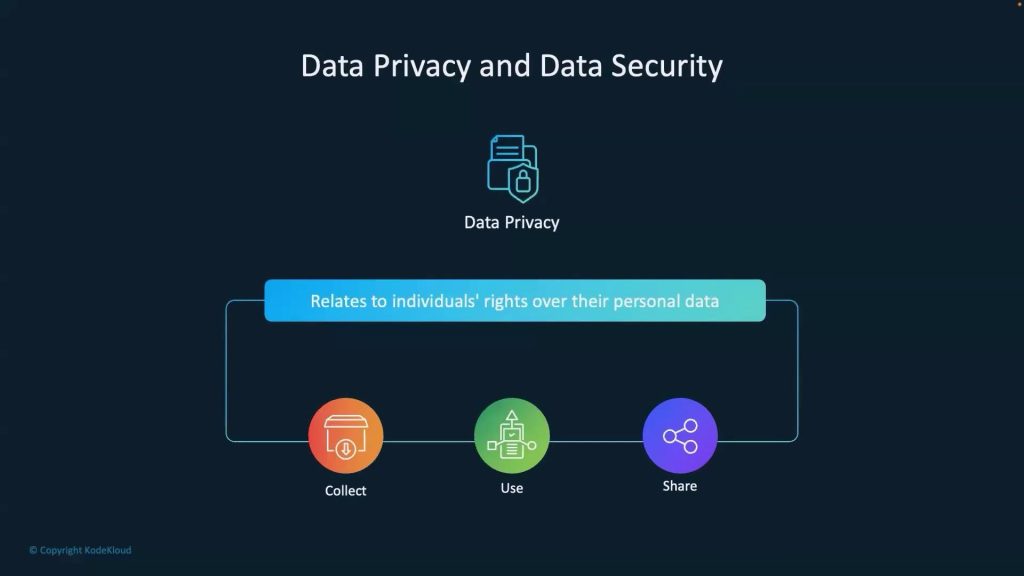
The CDR regulatory structure incorporates 13 privacy safeguards administered by the OAIC. These establish comprehensive protections for financial information exchanged during loan application processes.
Essential security requirements include:
- Mandatory encryption for all data transmission using bank-grade security protocols
- Advanced multi-factor authentication mechanisms replacing password-based verification
- Strict data minimisation principles limiting collection to application-relevant information
- Mandatory breach notification within 72 hours of confirmed security incidents
Consumers possess five fundamental rights under CDR legislation. Data access rights enable review of collected information. Correction rights permit amendment of inaccurate records. Deletion rights allow removal of unnecessary retained data. Portability rights facilitate provider transitions. Withdrawal rights enable immediate consent revocation.
The Australian Government is advancing towards comprehensive screen scraping prohibition. Treasury is developing formal regulatory frameworks to eliminate this outdated practice across financial services sectors.
Action Initiation Capability Development
The Treasury Laws Amendment (Consumer Data Right) Act 2024 establishes “action initiation” functionality within the CDR framework. This legislative expansion enables consumers to authorise accredited third parties to execute specified actions rather than merely access data.
Potential loan management applications include automated repayment scheduling from designated accounts. Streamlined provider switching with automated account establishment becomes possible. Instantaneous personal information updates across multiple financial relationships are also enabled.
Government guidance indicates action initiation capabilities will activate following CDR ecosystem stabilisation. This represents next-generation financial service integration.
Consumer Due Diligence Recommendations
Before submitting loan applications, consumers should evaluate several factors regarding lender data handling practices.
Prospective borrowers should inquire about CDR compliance preparation status and implementation timelines. Responsible lenders maintain transparency regarding regulatory readiness.
Applications should include explicit data access catalogues detailing specific information categories collected. Inability to provide comprehensive disclosure indicates potential compliance deficiencies.
Consent authorisations require defined temporal parameters appropriate to loan terms. Short-term financial products should not mandate indefinite data access permissions.
Permission revocation procedures should feature straightforward execution. These should not require complex administrative processes or customer service intervention.
Security protocols must incorporate bank-grade encryption standards for all data transmission. Lenders should readily confirm technical security specifications.
Data sharing arrangements with third parties require explicit disclosure and separate consumer authorisation. CDR regulations strictly limit onward data sharing absent specific permissions.
Impact of Regulatory Reform on Consumer Protection
The CDR transformation represents Australia’s most consequential consumer finance regulatory evolution since open banking implementation. Individuals accessing fast loans will benefit from standardised transparent processes and strengthened privacy protections. They also gain genuine control over financial information sharing.
As the mid-2026 compliance deadline approaches, the expedited lending sector faces substantial operational adjustments. The transition from opaque screen scraping to transparent CDR protocols fundamentally reorients the consumer-lender data relationship.
Financial counselling services remain available through the National Debt Helpline (1800 007 007). These services assist consumers requiring help navigating loan options or understanding data rights under reformed regulations.
The CDR framework continues evolving through iterative regulatory refinement and expanded sectoral implementation. The foundational principle remains constant: consumer financial data constitutes personal property requiring explicit consent for commercial utilisation. Reformed consent flows operationalise this principle through enforceable regulatory standards backed by comprehensive supervisory oversight.